
DIY Oil Change Tools Guide: How to Choose the Right Equipment for Your Vehicle
Table of contents DIY Oil Change Tools Checklist: What You…

DIY Oil Change Tools Checklist: What You Need
Taking charge of your car’s upkeep doesn’t just save money, it builds confidence and mechanical know-how. With the right equipment, what seems like a daunting task becomes straightforward and rewarding. This guide focuses on five specialized products designed to simplify every step of the process, whether you’re draining fluids or accessing hard-to-reach components.
MichaelPro’s lineup stands out for its precision engineering and user-focused designs. Their spill-free funnel, durable drain pan, and vehicle-specific filter wrench eliminate common frustrations. Paired with a sturdy creeper and versatile socket set, these items transform your workspace into an efficient home garage.
Investing in purpose-built gear ensures cleaner results and long-term savings. Quality matters: reliable construction means fewer replacements, while smart features reduce errors. Let’s explore how these tools turn complex jobs into manageable routines.
Key Takeaways
- Home maintenance builds skills while cutting service costs
- Specialized equipment prevents spills and improves efficiency
- Vehicle-specific designs ensure proper fit and function
- Durable materials extend tool lifespan for repeated use
- Proper gear minimizes cleanup time and potential errors
Introduction to DIY Oil Change Tools
Mastering basic car care starts with simple tasks that yield big rewards. Routine fluid replacement serves as the foundation for preserving engine health and avoiding costly repairs. Commercial service centers charge $35-$125 for this service, but completing it yourself cuts costs by up to 60%.
Overview of Fluid Replacement Process
The core procedure involves three key steps: draining used fluid, swapping filters, and adding fresh lubricant. Proper equipment transforms this maintenance from a messy chore to a streamlined operation. Vehicle-specific tools ensure secure fittings and prevent leaks during the process.
Advantages of Home Maintenance
Consistent scheduling becomes effortless when you bypass shop appointments. Other benefits include:
- Direct selection of premium-grade lubricants
- Immediate identification of undercarriage wear
- Development of troubleshooting skills
Most enthusiasts complete the task in under an hour after initial setup. This hands-on experience builds mechanical awareness that applies to more advanced repairs. With proper preparation, you maintain peak performance while keeping $15-$70 per service in your pocket.
Essential DIY Oil Change Tools
Transforming a messy task into a clean operation requires smart gear designed for precision. MichaelPro’s engineered solutions address common frustrations while enhancing safety and efficiency during vehicle servicing.
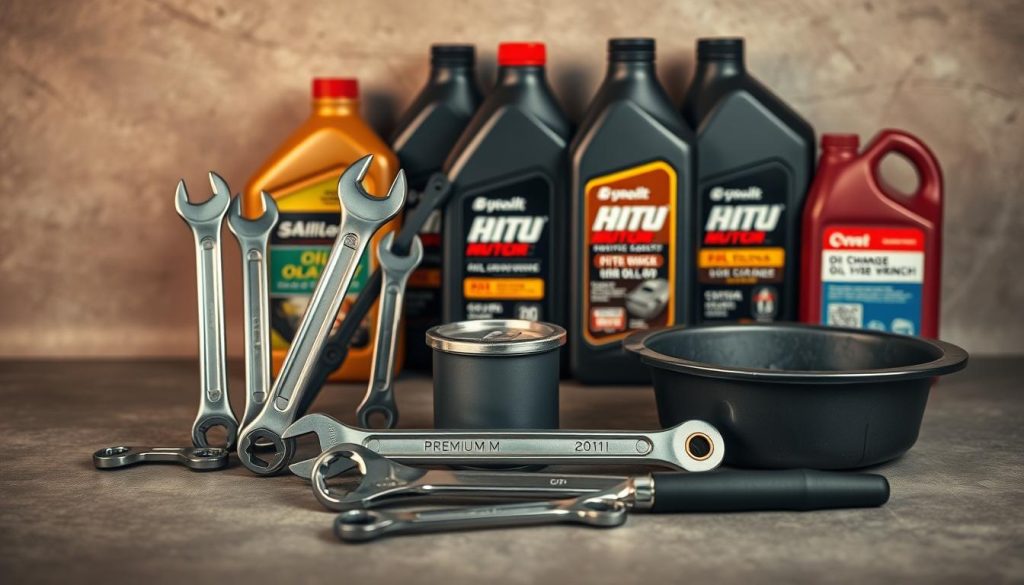
Highlighting Must-Have Michael Pro Tools
The spill-free funnel system locks securely into filler necks using threaded connections. This design eliminates drips during fluid transfers, letting you pour confidently without constant monitoring.
MichaelPro’s 8-liter collection container features an anti-splash rim and angled spout. Built for easy waste disposal, it prevents workplace hazards while accommodating most vehicle capacities.
| Product | Key Feature | Benefit |
|---|---|---|
| Filter Cap Wrench | Vehicle-specific sizing | Prevents slippage on Toyota/Lexus models |
| Mechanic Creeper | 42″ low-profile design | Reduces back strain during undercarriage work |
| Socket Set | 25-piece configuration | Handles multiple drain plug sizes |
Product Benefits and Features
The oil filter wrench’s exact-fit engineering protects component surfaces from scratches. Its textured grip maintains control even when dealing with stubborn filters.
Durable polypropylene construction ensures the drain pan withstands chemical exposure. Integrated handles simplify transport to recycling centers after servicing.
MichaelPro’s ratchet set includes a breaker bar for tackling overtightened fasteners. Heat-treated sockets resist rounding, preserving both components and your investment.
How to Safely Prepare Your Vehicle for an Oil Change
Proper workspace setup prevents accidents and ensures smooth maintenance. Before reaching for any equipment, park on level ground and gather your safety gear. Clear debris from your driveway or garage floor to create a stable surface.
Setting Up with Jack Stands or Ramps
Car ramps simplify elevation for most models. Center them with your front wheels and drive forward slowly. Engage the parking brake immediately after positioning. For extra security, place wheel chocks behind rear tires.
Jack stands work better in tight spaces. Always lift from manufacturer-marked points on the frame. Never rely solely on a hydraulic jack; combine it with stands for stability. Check for wobbling by gently rocking the vehicle before crawling underneath.
| Equipment | Best For | Safety Tip |
|---|---|---|
| Ramps | Quick elevation Stable platforms | Use on concrete surfaces only |
| Jack Stands | Precise adjustments Low-clearance areas | Pair with a hydraulic jack |
Combining both methods creates redundancy. Use ramps for primary elevation and as backup supports. This approach reduces risks during extended work periods.
Final stability checks are non-negotiable. Test all contact points and listen for creaking sounds. Your life depends on these preparations – never rush this phase.
Step-by-Step Guide to Changing Your Oil
Methodical preparation transforms routine maintenance into a streamlined process. Following these steps ensures efficient fluid replacement while minimizing environmental impact and personal risk.
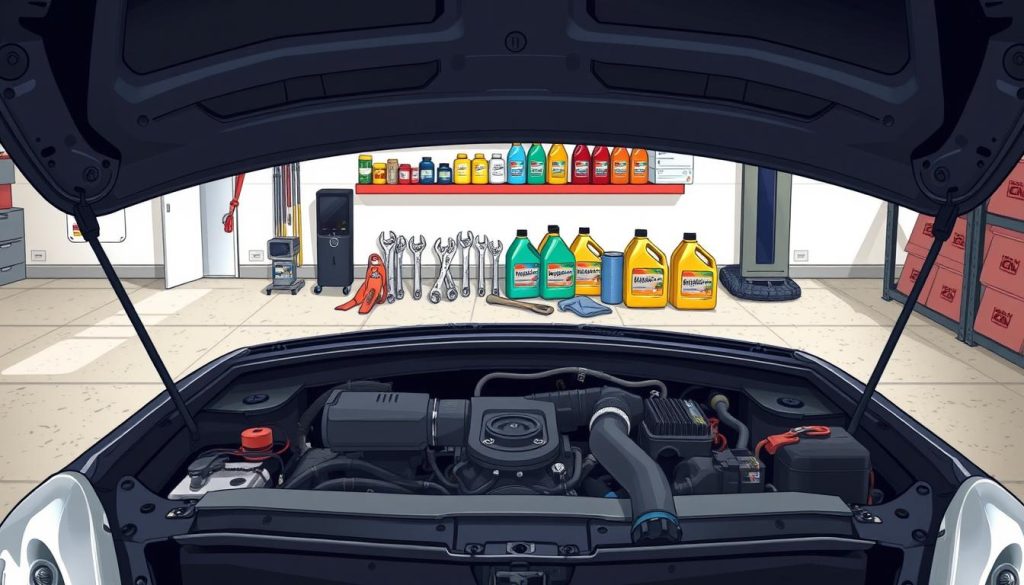
Preparing Your Workspace and Safety Gear
Begin by organizing your equipment on a clean, flat surface. Essential items include:
- Protective eyewear to shield eyes from splashes
- Nitrile gloves are resistant to hot fluids
- Absorbent mats for accidental drips
Position your drain pan directly beneath the vehicle’s undercarriage. Double-check that ramps or jack stands remain stable before proceeding.
Drain Plug, Filter Removal, and Oil Pouring
Attach the correct-sized ratchet socket to your wrench. Turn the drain plug counterclockwise slowly until resistance fades, then unscrew it completely by hand. Allow 12-15 minutes for complete fluid drainage.
Reposition your collection container beneath the filter housing. Use a specialized wrench to break the filter’s seal without damaging its housing. Wipe the mounting surface clean before installing the new filter hand-tight.
Reinstall the drain plug using a torque wrench set to the manufacturer’s specifications. Pour fresh lubricant through a funnel, monitoring levels with your dipstick between additions. Most engines require 4-6 quarts for optimal performance.
Choosing the Right Oil and Filter for Your Vehicle
Proper lubrication starts with matching your car’s needs to quality components. Vehicle manufacturers provide precise specifications in owner’s manuals, while online databases simplify product selection. Getting this match right protects critical components and maintains warranty coverage.
Understanding Oil Specifications
Modern engines demand specific viscosity grades like 0W-20 or 5W-30. These numbers indicate flow characteristics during cold starts and high-temperature operation. Thinner winter grades (0W) ensure quick circulation, while the second number (30) shows thickness at normal engine heat.
Synthetic formulas outperform conventional options through advanced additives and refined base stocks. Brands like Mobil 1 offer protection for 10,000+ miles in ideal conditions. Always check your manual for approved certifications like API SN Plus or Dexos1.
| Oil Type | Best For | Change Interval |
|---|---|---|
| Conventional | Older vehicles | 3,000-5,000 miles |
| Full Synthetic | Turbocharged engines | 7,500-15,000 miles |
| High Mileage | Cars over 75k miles | 5,000-7,500 miles |
Selecting the Correct Filter
Filters vary by thread size, bypass pressure, and anti-drainback features. Premium options use synthetic media that traps smaller particles without restricting flow. Look for rubber gaskets that seal tightly and steel housings resistant to pressure spikes.
Cross-reference your vehicle’s year/make/model using store finders or manufacturer charts. Incorrect filters can cause leaks or allow contaminants into sensitive engine areas. Pairing the right components ensures clean lubrication from startup to the next service.
Tips for an Efficient and Clean Oil Change
Achieving a spotless workspace requires strategic equipment choices and methodical execution. Focused preparation and precision tools turn potential disasters into controlled processes, keeping your garage floor pristine.
Smart Gear for Mess-Free Maintenance
Specialized collection containers with wide openings catch initial fluid surges when you remove oil from the system. Look for models featuring:
- Built-in measurement markers for accurate disposal tracking
- Non-slip bases that prevent tipping during transfers
- Chemical-resistant materials that withstand repeated use
Threaded funnels create airtight seals with filler necks, enabling hands-free pouring. This design prevents overflow during refills. Simply secure the adapter and let gravity do the work.
| Equipment | Critical Feature | Spill Prevention Benefit |
|---|---|---|
| Drain Pan | Anti-splash grid | Controls fluid velocity during initial drain |
| Filter Wrench | Contoured grip | Prevents slippage during filter drain |
| Funnel System | Locking collar | Eliminates drips during fluid transfer |
Position absorbent pads under all work areas to catch stray droplets. When handling the oil drain plug, keep a magnet nearby to retrieve dropped fasteners instantly. Always make sure your drain pan sits level before starting – uneven placement causes unexpected spills.
Complete the process by double-checking connections. Make sure replacement components seat properly before adding fresh lubricant. These precautions reduce cleanup time while protecting local ecosystems from contamination.
Maintaining Your DIY Oil Change Tools
Proper care extends your equipment’s lifespan while ensuring peak performance. Durable materials like reinforced polymers and chrome-vanadium steel withstand repeated use, but smart maintenance practices maximize their value. Well-maintained gear operates smoothly, saving time during future projects.
Cleaning and Storage Best Practices
Wipe down your drain pan and socket set after each use with a degreaser. For wrenches, scrub threads with a brass brush to remove grit. Store ratchets in sealed containers to prevent moisture damage – silica gel packs absorb residual humidity.
Regular Tool Inspection for Longevity
Check your wrench jaws monthly for rounding or cracks. Test socket retention springs by clicking them onto drive ends. Inspect drain pans for stress fractures along seams. Lubricate ratchet mechanisms quarterly with light machine oil.
Consistent upkeep prevents corrosion and ensures reliable operation. Quality construction shines through when tools receive proper attention – your investment stays protected while maintaining workshop efficiency.
FAQ About DIY Oil Change Tools
What tools are absolutely necessary for a home oil change?
A sturdy drain pan, ratchet socket set, filter wrench, funnel, and jack stands are critical. Brands like GearWrench or Lisle offer durable options designed to handle automotive fluids and tight spaces.
How do I safely lift my car without professional equipment?
Use reinforced steel ramps like Race Ramps or jack stands from Torin. Always park on level ground, engage the parking brake, and place wheel chocks behind the rear tires for stability.
Can I reuse my old oil filter during a change?
No. Filters like Fram Ultra Synthetic or Mobil 1 Extended Performance are single-use. Reusing them risks contamination, reduced engine protection, and potential damage from trapped debris.
What’s the best way to avoid spills when draining used oil?
Opt for a spill-proof drain pan with a screw-top lid, such as the Lisle 14510. Position it directly under the plug, and use a funnel when transferring used fluid to storage containers.
How often should I inspect my oil change tools?
Check sockets, wrenches, and ramps every 3–6 months. Look for cracks, rust, or wear. Clean tools after each use with degreaser and store them in a dry, organized toolbox.
Does synthetic oil require special handling compared to conventional?
While pouring steps are similar, synthetics like Castrol EDGE or Pennzoil Platinum flow faster. Ensure your funnel and drain pan are positioned securely to prevent splashing.
Why does my vehicle’s manual specify certain oil weights?
Engines are calibrated for viscosity grades like 5W-30 or 0W-20. Using the wrong type can reduce efficiency, increase wear, or void warranties. Match the manual’s recommendations exactly.