
Top Reasons to Choose the Nissan e‑Power Hybrid in 2025
A new era of hybrid vehicles is arriving in North America, blending electric driving sensations with gasoline convenience. Unlike traditional hybrids that switch between engine and motor power, this innovative system uses the gas engine solely to generate electricity. The wheels are always driven by electric motors, creating a smoother, quieter ride that mimics a full EV.
First introduced overseas in 2016, this groundbreaking approach has already powered over 1.5 million vehicles worldwide. The upcoming third-generation version boosts fuel efficiency by 20% while cutting production costs by the same margin. Drivers can expect quicker acceleration and longer range compared to earlier models.
North American availability is confirmed before March 2027, marking a major expansion for this proven technology. Early adopters in Japan and 67 other markets have enjoyed reduced refueling stops and lower emissions without charging cables. The design eliminates range anxiety while delivering an instant torque characteristic of electric drivetrains.
Key Takeaways
- Series-hybrid architecture separates engine from wheel propulsion
- Delivers EV-like driving dynamics with gas-powered convenience
- Third-generation system improves efficiency by 20%
- North American launch planned by early 2027
- Proven in global markets with 1.5 million units sold
Nissan e‑Power hybrid – Evolution and Core Benefits
The journey of this innovative drivetrain began with a bold idea: redefining how energy flows in hybrid vehicles. Since its debut, the technology has evolved through three distinct phases, each addressing real-world driver needs.
From First Generation to the Upcoming Third Generation
Launched in 2016, the initial version proved that a gasoline engine could work purely as a generator. Early adopters enjoyed seamless acceleration without range anxiety. The second iteration focused on refinement, boosting fuel economy by 10% through smarter energy management.
Now, the third-generation system introduces groundbreaking changes. A tumble-flow combustion design aims for 50% thermal efficiency, a 25% improvement over conventional engines. This leap forward comes from reimagining air-fuel mixing patterns during combustion.
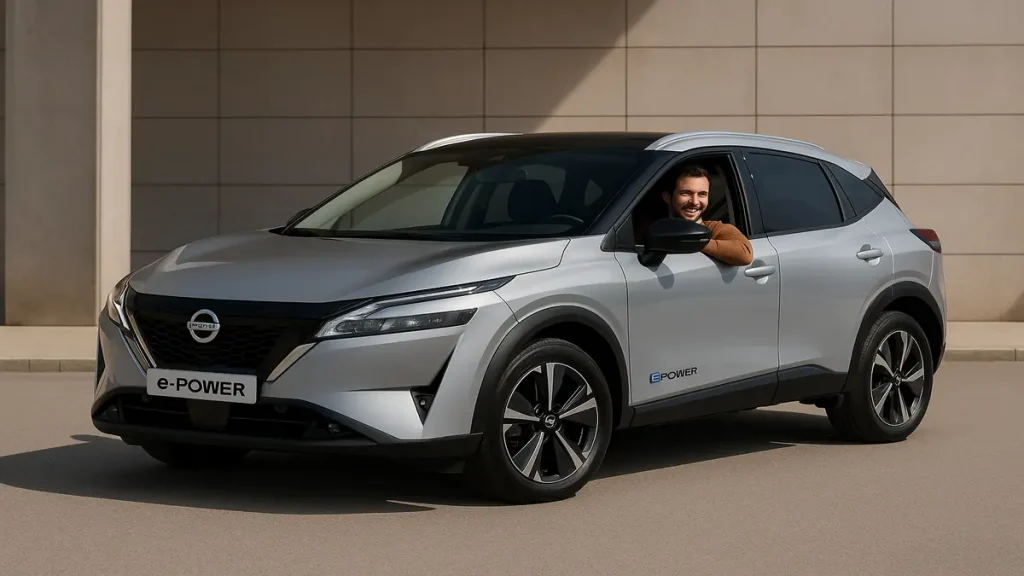
Key Features and Technological Advancements
Three pillars define the latest updates:
- Adaptive mapping adjusts engine revs in real-time
- Enhanced battery thermal management extends component life
- Redesigned motor windings reduce energy loss
| Generation | Key Improvement | Efficiency Gain |
|---|---|---|
| First (2016) | Series-hybrid proof of concept | 35% thermal efficiency |
| Second | Engine refinement | +10% fuel economy |
| Third (Upcoming) | Tumble-flow combustion | 50% thermal efficiency target |
These upgrades work together to create what engineers call a “self-optimizing energy ecosystem”. The system now predicts driving patterns, adjusting power delivery before hills or acceleration demands occur.
In-Depth Look at the Hybrid Technology and Design
Modern automotive engineering achieves its greatest breakthroughs when rethinking energy flow. This approach shines in the latest series-hybrid architecture, where mechanical connections between components become obsolete.
Innovative Engine and Powertrain Integration
A compact 1.5-liter turbocharged three-cylinder unit forms the system’s core. Unlike conventional setups, this gasoline engine operates exclusively as a generator, producing 142 horsepower and 184 lb-ft of torque. Its sole purpose: convert fuel into electricity without ever engaging the wheels.
Two permanent-magnet motors handle propulsion. The front unit delivers 201 hp and 243 lb-ft, while the rear adds 134 hp for all-wheel traction. Combined output reaches 211 hp – matching many V6 engines while maintaining instant electric response.
Battery Capacity and Electric Motor Synergy
The 2.1-kWh lithium-ion battery pack acts as a dynamic energy reservoir. Larger than competitors’ units, it buffers power between the generator and motors. During acceleration, both the battery and engine-fed generator supply energy simultaneously.
This design eliminates traditional charging needs. The system automatically maintains optimal charge levels, ensuring immediate power availability. Drivers experience EV-like thrust without range limitations or plug-in requirements.
Urban Driving and Highway Performance Insights
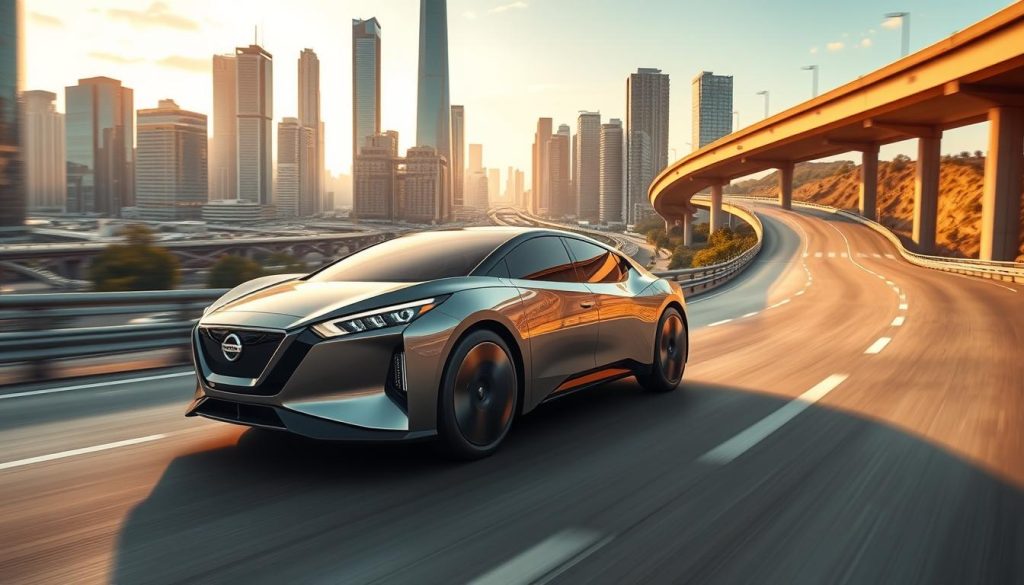
City commutes and highway cruises each test hybrid technology uniquely. This setup shines in stop-and-go traffic while facing distinct challenges at sustained speeds. Let’s examine how it performs where drivers spend most of their time.
City Driving Experience and Responsiveness
Acceleration feels instantaneous when leaving traffic lights, a trademark of electric propulsion. Test drives in Tokyo showed the gasoline generator activates silently, maintaining cabin tranquility below 40 mph. The series-hybrid architecture eliminates gear shifts, creating fluid motion through crowded streets.
Three factors enhance urban usability:
- Immediate torque response matches pure EVs
- Engine vibrations stay below human perception thresholds
- Regenerative braking recovers energy without abrupt deceleration
Highway Efficiency and Long-Distance Challenges
Steady 70 mph cruising reveals the system’s current limitations. Earlier models sometimes exhibited slight power fluctuations during prolonged climbs. Engineers redesigned energy routing algorithms to minimize these effects in the updated version.
Key highway improvements include:
- 15% reduction in engine cycling frequency
- Enhanced thermal management for consistent output
- Predictive navigation integration adjusts power flow preemptively
While city efficiency surpasses conventional hybrids, highway MPG remains an area for development. The latest iteration narrows this gap through smarter power allocation between the generator and battery.
Comparative Analysis with Competing Hybrid Models
Hybrid crossovers face intense competition as automakers refine their electrified offerings. This segment’s leaders set high benchmarks for efficiency and reliability, creating a challenging landscape for new entrants.

Weight and Efficiency Trade-Offs
The dual-motor configuration adds 200-300 pounds compared to rival models. This extra mass impacts fuel economy, and international testing shows a 12% gap versus leading competitors. However, the unique powertrain layout enables smoother acceleration patterns than conventional hybrid systems.
| Model | Weight | Projected MPG |
|---|---|---|
| RAV4 Hybrid | 3,850 lbs | 40 combined |
| CR-V Hybrid | 3,900 lbs | 38 combined |
| 2026 Crossover | 4,136 lbs | 36 combined |
Strategic Differentiation Approach
While established brands dominate hybrid sales, the electric-first driving character offers distinct advantages. Instant torque delivery and refined cabin experience appeal to EV-curious buyers. This strategy targets drivers prioritizing responsiveness over marginal fuel savings.
Key competitive strengths include:
- Dual-motor AWD system enhances traction
- 25% quicker 0-30 mph acceleration than segment averages
- Reduced engine vibration during city driving
Conclusion
Breaking away from conventional designs, modern hybrids prioritize seamless energy management. The series-hybrid system redefines power delivery by decoupling the gasoline engine from wheel propulsion. Third-generation advancements achieve 20% greater efficiency while lowering production costs, a dual win for drivers and manufacturers.
This setup delivers instant torque response characteristic of electric motors, creating a refined urban driving experience. However, optimizing highway performance remains crucial for American consumers accustomed to long-distance travel. Engineers continue refining energy routing algorithms to balance power demands across varied terrains.
The anticipated 2026 launch introduces this technology in a popular crossover segment. Achieving 40+ MPG could position it as a strong contender against established rivals. While late to the market, lessons from global adoption provide valuable insights for U.S. adaptation.
By prioritizing driver engagement alongside efficiency gains, this innovative powertrain approach carves a unique niche. It demonstrates how rethinking traditional combustion systems can create compelling alternatives in the evolving automotive landscape.