
Classic Cars to Restore: Timeless Projects for Every Budget
The automotive restoration scene is thriving as enthusiasts rediscover the charm of vintage vehicles. Rising interest stems from nostalgia, stricter modern vehicle regulations, and growing collector demand. This guide highlights timeless options that balance mechanical simplicity with strong market value.
Restoring older vehicles offers more than just a hobby’s a chance to preserve automotive history. Many underappreciated gems from the ’70s to early 2000s are now gaining attention. Their mechanical designs allow for hands-on repairs, unlike today’s computer-dependent systems.
We’ve prioritized vehicles with readily available parts and active owner communities. From American muscle to European roadsters, our selections consider long-term appreciation and project feasibility. Even budget-friendly picks can yield impressive returns with proper care.
Key Takeaways
- Older vehicles are appreciating due to nostalgia and collector demand
- Simpler mechanical systems make restoration more achievable
- Parts availability significantly impacts project success
- Community support helps navigate restoration challenges
- Certain late-model vehicles are becoming future collectibles
Whether you’re drawn to roaring V8 engines or sleek European designs, this year’s standout options blend passion with practicality. The following sections break down what makes specific models worthy investments for 2025.
Introduction to Classic Car Restoration
Reviving vintage automobiles isn’t just about fixing engines; it’s about resurrecting stories. Each rusted panel and worn seat carries decades of road trips, family memories, and engineering breakthroughs. This hands-on craft lets enthusiasts touch history while creating something functional again.
The Legacy and Allure of Vintage Vehicles
Older automobiles stand out in today’s digital world. Their mechanical designs let drivers feel every gear shift and hear the raw hum of unfiltered engines. Analog controls create a physical bond between human and machine that touchscreens can’t replicate.
Many pre-2000 models feature hand-shaped bodywork and chrome details lost in modern manufacturing. These elements give each ride a personality that newer cars often lack. As one restorer notes: “Working on a ’78 Corvette feels like collaborating with engineers from another era.”
Why Restoration Remains a Timeless Passion
Bringing neglected autos back to life offers unmatched satisfaction. The process teaches problem-solving skills as restorers decode forgotten engineering solutions. Online forums and local clubs provide vital support, turning solitary projects into community efforts.
| Decade | Parts Availability | Skill Level Required | Community Support |
|---|---|---|---|
| 1970s | High | Intermediate | Strong |
| 1980s | Moderate | Beginner-Friendly | Growing |
| 1990s | Variable | Tech-Savvy | Emerging |
This table shows why certain eras attract different enthusiasts. While ’70s models need more expertise, their abundant parts make them forgiving for newcomers. The joy comes from balancing historical accuracy with personal creativity, a mix that keeps this hobby alive across generations.
Understanding the 2025 Classic Car Market
Navigating shifting vehicle values requires sharp awareness of economic patterns and cultural shifts. Recent data shows a clear divide between models losing relevance and those gaining collector attention. This creates opportunities for restoration enthusiasts to spot hidden potential before prices surge.
Current Trends in Depreciation and Appreciation
Vehicles from the 1980s are now hitting their sweet spot for value growth. After decades of declining prices, many have bottomed out and started climbing. Manual transmission models often see 15-20% higher resale values compared to automatics.
Stricter emissions rules push enthusiasts toward older designs. Cars with simpler engines and no computerized parts are easier to maintain today. One restorer explains: “Pre-OBDII vehicles let owners fix issues without dealership software.”
| Model | Production Era | Price Change (2019-2024) | Key Factor |
|---|---|---|---|
| Datsun 240Z | 1970s | +89% | Scarcity |
| BMW E30 | 1980s | +62% | Enthusiast Demand |
| Mazda MX-5 NA | 1990s | +47% | Driving Experience |
| Pontiac GTO | 2000s | +33% | Nostalgia |
This table highlights how different eras gain value for unique reasons. Early 2000s models are just entering their appreciation phase, making them smart targets. Market experts suggest focusing on vehicles that represent last-of-their-kind engineering approaches.
The cycle typically spans 20-30 years, turning forgotten daily drivers into sought-after gems. Tracking auction results and owner forums helps identify which models might spike next. Timing matters—entering the market before hype builds maximizes returns.
Best Classic Cars to Restore 2025
Spotting tomorrow’s collectibles requires understanding what makes certain vehicles stand the test of time. The Porsche 911 (997) generation exemplifies this balance—while its GT3 RS commands premium prices, base models remain accessible restoration candidates.
Key Features That Make a Model a Future Classic
Tomorrow’s sought-after vehicles often showcase mechanical purity. Manual gearboxes, naturally aspirated engines, and limited driver aids create engaging experiences modern models can’t replicate. “The 997 GT3 represents the last true analog sports car,” notes Porsche historian James Carter. “Its hydraulic steering and cable throttle response are extinct in newer versions.”
Collector Interest and Investment Potential
Scarcity and historical significance drive value growth. Limited-production variants like the 997 Sport Classic have tripled in value since 2015. However, even mainstream examples gain traction as enthusiasts recognize their transitional engineering. Key factors include:
- Factory specifications favoring driver engagement
- Strong aftermarket parts networks
- Active owner communities sharing repair knowledge
Models offering these traits often appreciate faster than their tech-heavy counterparts, making them smart targets for restoration-focused investors.
Evaluating Restoration Potential in Iconic Models
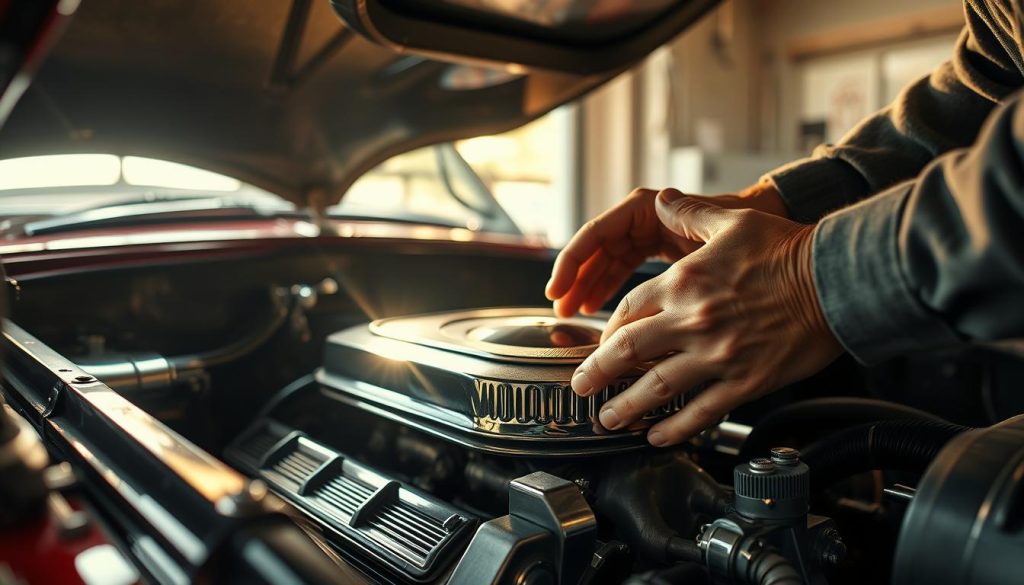
Assessing a vehicle’s restoration worthiness starts with understanding its bones. Original components like matching-numbers engines often determine project viability. Even non-running examples retain value if critical systems remain intact.
Mechanical Integrity and Authenticity
Rust-free frames and unmodified drivetrains are gold. Structural damage often costs more to repair than mechanical issues. A seized engine matters less than bent suspension mounts or rotted floor pans.
Documentation separates hidden gems from money pits. Service records and original window stickers boost resale potential. Low-owner examples typically have clearer histories, reducing guesswork during restoration.
| Factor | Priority Level | Impact on Project |
|---|---|---|
| Frame Condition | Critical | Determines structural safety |
| Parts Availability | High | Affects timeline and budget |
| Documentation | Moderate | Increases final value |
Models with strong aftermarket support simplify sourcing. For rare vehicles, fabricating missing pieces can double restoration costs. Community expertise also matters—popular models have detailed repair guides.
Production numbers influence long-term value. Limited-run variants often justify higher investments. As one specialist notes: “A numbers-matching drivetrain transforms a project from hobby to heritage.”
American Muscle Icons and Their Revival
Roaring engines and bold designs define America’s automotive legacy. Two models stand out for their cultural impact and restoration potential: the Ford Mustang and Dodge Charger. Their blend of accessible power and timeless styling continues to inspire new generations of enthusiasts.
Spotlight on Ford Mustangs and Dodge Chargers
The first-generation Ford Mustang rewrote automotive marketing rules. Launched in 1964, its affordable price and customizable options that have made performance accessible. The 1967 Fastback became legendary with its elongated hood and 390-cubic-inch V8 engine. “You could feel the road through the steering wheel,” recalls a longtime owner.
Dodge Chargers gained fame through films and racing circuits. The 1969 model’s hidden headlights and Coke-bottle shape remain iconic. Its unibody construction often survives decades better than competitors’ designs. Restoration experts praise the Charger’s heavy-duty frame as ideal for structural integrity.
| Feature | 1967 Mustang Fastback | 1969 Dodge Charger |
|---|---|---|
| Engine Options | 6-cylinder to 428 Cobra Jet | 318ci to 426 Hemi |
| Aftermarket Parts | 95% available | 85% available |
| Average Project Cost | $25k-$50k | $30k-$65k |
Both models offer multiple trim levels to match restoration goals. Entry-level projects focus on drivable condition, while concourse restorations demand factory-correct details. Active owner communities provide wiring diagrams and trim code databases.
Enthusiasts value these vehicles for their mechanical simplicity. Unlike modern computer-controlled systems, their engines respond to hands-on tuning. This accessibility makes them perfect for learning automotive craftsmanship while preserving history.
European Elegance in Classic Car Restoration
European automotive engineering has long blended artistry with mechanical innovation. Restoring these vehicles demands attention to precision craftsmanship, where every curve and component reflects decades of design philosophy. Unlike their American counterparts, European models often prioritize balance over brute force difference, which shapes restoration approaches.

Engineering Mastery Meets Artistic Vision
The first-generation Audi R8 redefined supercar styling in 2006 with its space-age aesthetics. Its aluminum body and mid-engine layout remain benchmarks for modern sports cars. Manual transmission models now command premium prices, proving timeless appeal transcends technological trends.
Lotus transformed accessible performance with the Elise Series 2. By integrating Toyota’s reliable engines into its featherweight chassis, it delivered razor-sharp handling without sacrificing durability. “You don’t just drive it, you wear it like a tailored suit,” remarks a longtime owner.
Consider these standout models:
- Alpine A110 (2018): 1,102kg curb weight enables 0-60mph in 4.5 seconds
- Audi R8 V8: Appreciation rates up 22% since 2020 for unmodified examples
- Lotus Elise S2: 85% parts compatibility with Toyota Celica components
European restoration communities thrive on shared technical knowledge. Online forums provide wiring diagrams specific to each era, while specialty suppliers reproduce discontinued trim pieces. This support network helps enthusiasts tackle complex projects that reward patience with unmatched driving purity.
Budget-Friendly Restoration Projects
Entry-level enthusiasts often find their passion through accessible models that won’t drain savings. These hidden gems combine mechanical simplicity with growing collector interest, creating perfect starter projects.
Affordable Classics Worth the Investment
The first-generation Dodge Dart stands out for its balance of reliability and value. Current market listings show well-maintained examples around $21,600; a fraction of muscle car prices. It’s a straightforward design that uses Chrysler’s legendary slant-six engine, known for surviving decades of use.
Plymouth Valiant models offer even lower entry costs than the Dart’s sibling. The 170 CID engine provides ample space for DIY repairs. “These engines were built for mechanics, not computers,” notes vintage Mopar specialist Rachel Torres. Their uncomplicated systems let beginners learn fundamentals without complex tools.
| Model | Average Price | Engine Bay Space | Parts Availability |
|---|---|---|---|
| Dodge Dart | $21,600 | Good | 85% |
| Plymouth Valiant | $16,900 | Excellent | 78% |
Key advantages for new restorers:
- Minimal electronics simplify troubleshooting
- Abundant aftermarket support reduces sourcing headaches
- Strong owner communities share repair techniques
Focus on structural integrity over cosmetic flaws when selecting projects. Solid frames and drivetrains matter more than faded paint. These vehicles prove that smart choices beat big budgets in preservation work.
Essential Restoration Tips and Best Practices
Breathing new life into vintage autos demands equal parts research and resourcefulness. Veteran restorers emphasize three pillars: thorough planning, reliable parts networks, and respect for a vehicle’s original character. These principles help avoid costly missteps while preserving historical value.
Securing Quality Parts and Expert Assistance
Models like the Chevrolet Bel Air showcase the power of strong aftermarket support. Nearly every component, from trim pieces to engine gaskets, remains available through specialty suppliers. “Owner forums become goldmines for tracking down obscure items,” notes a Michigan-based restorer.
When original parts prove elusive, consider these options:
- Reproduction manufacturers offering exact replicas
- Salvage yards specializing in vintage inventory
- 3D printing services for rare plastic components
Balancing Original Charm With Modern Upgrades
Safety enhancements often justify subtle changes. Disc brakes or LED lighting improve functionality without altering a car’s core identity. The key lies in choosing reversible modifications that maintain historical accuracy.
Document every change made during the process. Future collectors value transparency about which things stayed original and what received updates. This honesty preserves both the vehicle’s story and its market appeal.