
Do Hybrid Cars Get Insurance Discounts? What Every Driver Should Know
The Hybrid Car Insurance Discount is one of the key perks of owning an eco-friendly vehicle, going beyond just fuel savings. Many insurers now reward drivers of energy-efficient models with specialized discounts. Providers like State Farm, USAA, and Geico lead the market, offering tailored programs that recognize the unique benefits of these vehicles.
Why do companies prioritize these drivers? Advanced safety technology and lower environmental impact often translate to reduced risk. Features like regenerative braking and collision avoidance systems contribute to fewer accidents, which insurers value. This trend has made coverage costs for eco-conscious drivers increasingly competitive.
Our guide breaks down how to leverage these advantages. We’ll compare top providers’ rates—from State Farm’s $70/month baseline to USAA’s budget-friendly $135 full coverage. You’ll also discover strategies to maximize savings while maintaining quality protection for your vehicle.
Key Takeaways
- Major insurers offer exclusive programs for energy-efficient vehicle owners
- Advanced safety features can lead to premium reductions
- State Farm provides comprehensive coverage starting at $70 monthly
- USAA delivers the most affordable full-coverage option at $135
- Eco-friendly driving habits may unlock additional savings opportunities
Understanding the Hybrid Vehicle Landscape
American roads now host over 5 million dual-power automobiles, with eco-conscious drivers opting for models that blend efficiency with innovation. This shift has reshaped how insurers evaluate risk and design policies for modern transportation solutions.
Growth of Dual-Power Models in the U.S.
Sales of gasoline-electric automobiles surged 40% since 2020, according to recent industry reports. Three factors drive this trend:
- Federal emissions standards are pushing manufacturers toward cleaner tech
- Urban commuters prioritizing fuel cost reduction
- Improved battery range in newer models
| Year | New Registrations | Market Share |
|---|---|---|
| 2020 | 1.2 million | 7.8% |
| 2023 | 2.7 million | 15.1% |
| 2025* | 4.3 million | 23.4% |
Specialized Coverage Factors
Dual-engine systems require mechanics with specific training, often increasing repair costs by 18-25% compared to conventional automobiles. Insurers now consider:
- Battery replacement expenses ($2,000-$6,000)
- Regenerative braking system repairs
- Software vulnerability risks
“The average claim for electric components costs 63% more than standard repairs,” notes a 2024 automotive industry white paper. This reality forces providers to adjust their pricing models while maintaining competitive offers.
hybrid car insurance discount
Insurers increasingly recognize drivers who choose energy-efficient transportation. Specialized programs reward these vehicle owners through tailored savings opportunities. Let’s explore how to qualify and what financial advantages await.
Qualification Criteria and Cost Reductions
Providers assess three primary factors for eligibility:
- Annual mileage below 12,000 miles
- Presence of collision prevention technology
- Clean driving record (3+ years)
A 2024 industry study revealed drivers meeting these criteria save an average of $214 yearly. Certain states like California and Vermont offer additional incentives through partner programs.
| Eligibility Factor | Minimum Requirement | Average Savings |
|---|---|---|
| Mileage | 7% | |
| Safety Features | 2+ ADAS systems | 12% |
| Driving History | No at-fault claims | 5% |
Exclusive Program Perks
Energy-efficient models unlock unique benefits beyond standard policies. Many providers bundle these with existing offers:
- 15% reduction for vehicles with top safety ratings
- Loyalty rewards for continuous eco-friendly coverage
- Dedicated repair networks for specialized components
“Our data shows environmentally conscious policyholders file 27% fewer claims than average drivers.”
Combining these opportunities can lead to substantial annual reductions. Always verify specific requirements with your provider, as programs vary by region and vehicle model.
Top Insurance Providers for Hybrid Vehicles
Navigating coverage options for modern vehicles requires understanding leading insurers’ offerings. Three companies dominate this space with tailored programs for energy-efficient models.
Market Leaders Compared
State Farm leads with A.M. Best’s B rating and comprehensive plans starting at $70 monthly. Their 17% bundling discount appeals to multi-policy holders seeking reliability.
USAA shines in customer support, earning A++ financial ratings. Military families benefit from specialized technical assistance and 10% savings when combining policies.
Geico delivers the most budget-friendly rates, pairing A++ stability scores with 25% multi-policy reductions. Their mobile app simplifies claims processing for tech-savvy drivers.
Savings Through Strategic Bundling
Combining policies unlocks major reductions across providers:
- Liberty Mutual & Allstate: 25% off bundled plans
- Nationwide & Farmers: 20% savings
- Progressive: 10% discount
“Bundling home and auto coverage saves customers $489/year on average.”
Specialty reductions stack with these offers. Safety-focused models often qualify for extra 12-15% premium cuts. Always verify eligibility through provider websites or agents.
Tailoring Coverage for Hybrid-Specific Needs
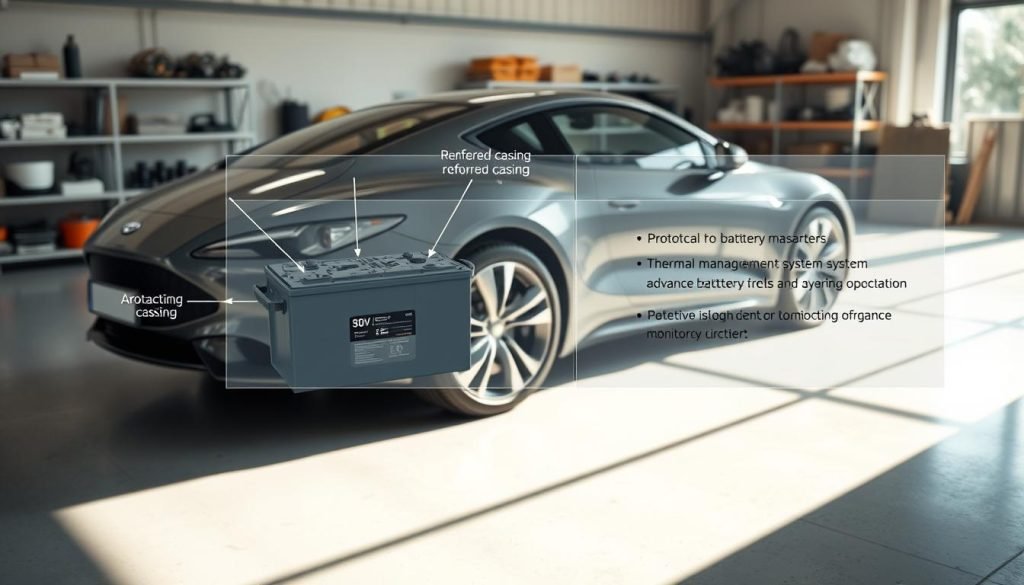
Modern dual-engine models demand customized policies that account for their sophisticated systems. Specialized components like regenerative energy systems and lithium-ion power cells require unique safeguards. Owners benefit most when policies address both immediate risks and long-term value retention.
Power System Safeguards
Energy storage units represent the most vulnerable and costly elements in modern vehicles. Replacement expenses for these components can exceed $6,000, making dedicated protection essential. Leading providers now offer:
- Full replacement cost coverage for factory-installed power cells
- Electrical surge protection for home charging setups
- Roadside assistance for sudden power failures
System Failure Protections
Dual-propulsion models face 38% higher repair bills than conventional automobiles according to 2024 repair data. Comprehensive plans should include:
| Coverage Type | Protection Scope | Average Annual Cost |
|---|---|---|
| Mechanical Breakdown | Dual-engine components | $240 |
| Gap Protection | Depreciation coverage | $175 |
| Enhanced Collision | Specialized part replacements | $310 |
“Dedicated system coverage reduces out-of-pocket expenses by 63% for complex repairs,” states a recent automotive financial report. Pairing these options with standard policies creates complete protection for technologically advanced models.
Impact of Driving Habits on Insurance Rates
How you drive significantly affects what you pay for coverage. Telematics programs now track real-world behavior to calculate personalized pricing. This shift benefits those who prioritize smooth acceleration and consistent speed maintenance.
Benefits of Low Mileage and Safe Driving
Drivers covering fewer than 9,000 miles annually save 11% on average. Reduced road time means lower collision risks. Many providers offer automatic reductions for mileage under 12,000 miles per year.
Common savings triggers include:
- Hard braking incidents below 2 per 100 miles
- Consistent speed maintenance within 5 mph of limits
- Nighttime driving under 15% of total trips
| Driving Factor | Ideal Threshold | Potential Savings |
|---|---|---|
| Annual Miles | < 10,000 | 14% |
| Hard Braking | < 1.5 per 100mi | 8% |
| Phone Usage | 0 incidents | 6% |
Programs like Allstate’s Drivewise and Progressive’s Snapshot track these metrics through mobile apps. Safe drivers can earn up to $450 in annual reductions. “Policyholders with top safety scores file 41% fewer claims,” notes a 2024 industry report.
Eco-conscious owners often benefit twice – through vehicle-specific discounts and behavior-based rewards. Combining these approaches maximizes savings while promoting road safety.
Bundling Options and Additional Discounts
Smart financial planning extends beyond vehicle choice to policy selection. Combining coverage types unlocks layered savings while maintaining robust protection. Strategic bundling often yields greater value than standalone plans.
Combining Home and Auto Policies
Linking property and vehicle protection creates immediate savings. Major providers offer 10-25% reductions for multi-policy holders:
| Provider | Bundling Discount | Annual Savings* |
|---|---|---|
| Liberty Mutual | 25% | $489 |
| Allstate | 22% | $412 |
| Nationwide | 18% | $327 |
*Based on an average $2,100 annual premium

Eco-Friendly and Safe Driver Discounts
Environmentally conscious households access extra incentives. Solar panel installations and energy-efficient appliances often qualify for 7-12% premium cuts. Defensive driving course completions add 5-8% reductions.
Common stackable offers include:
- Low-mileage rewards for under 9,000 annual miles
- Loyalty programs with 3% yearly increases
- Paperless billing bonuses up to $50
“Policyholders who bundle coverage save 19% more than those pursuing single discounts.”
State and Federal Incentives for Hybrid Cars
Government programs significantly reduce ownership expenses for environmentally friendly transportation. Both national and regional initiatives create financial advantages that complement insurance savings.
2025 Tax Breaks and Credits
New federal policies offer substantial savings for green vehicle purchases:
- $7,500 maximum credit for qualifying models
- Battery capacity requirements (minimum 7 kWh)
- Price caps based on vehicle type
State programs amplify these benefits:
| State | Incentive | Value |
|---|---|---|
| California | Rebate + HOV access | $7,500 |
| Oregon | Purchase rebate | $2,500 |
| Washington | Sales tax exemption | Up to $15,000 |
Eligibility Guidelines for Tax Incentives
Three primary factors determine qualification:
- New vehicle purchases only
- Manufacturer-specified battery thresholds
- Income limits ($150k single / $300k joint)
“Combining federal and state programs can offset 25% of purchase costs,” states a 2025 energy policy report. Some regions add ongoing perks like toll discounts or reduced registration fees.
Always verify program details through official .gov websites before finalizing purchases. Requirements frequently update based on legislative changes and funding availability.
Insurance Costs Comparison for Hybrid Vehicles
Comparing coverage costs reveals significant differences between leading providers. Strategic shoppers can leverage these variations to optimize their budgets while maintaining robust protection for their eco-friendly investments.
Monthly Rate Variations Among Top Providers
State Farm offers the most accessible entry point at $70 monthly for basic plans. USAA delivers exceptional value at $135 for comprehensive packages, while Geico balances affordability and tech-forward services starting at $82.
Key Factors Influencing Premiums
Three elements primarily determine pricing:
Advanced safety systems reduce collision risks, cutting costs by 12-18%. Low annual mileage (under 10,000 miles) triggers automatic savings. Geographic location also plays a role – urban drivers pay 22% more than suburban counterparts.
“Regular rate comparisons help drivers save $300+ yearly,” according to recent consumer reports. Always request updated quotes when policy renewal dates approach to capitalize on market changes.