
Why Used Electric Cars Are the Smart Buy in 2025
Used electric vehicles under 30000 are becoming more accessible as the automotive landscape shifts toward zero-emission models. Recent data shows these EVs depreciate up to 10 times faster than their gas-powered counterparts, creating unique opportunities for savvy buyers. This rapid value drop puts luxury brands and cutting-edge technology within reach of budget-conscious drivers.
A 2024 market analysis shows no new EV drops below $30,000 without potential tax incentives. This price gap makes certified pre-owned options particularly compelling. Models like the Tesla Model S demonstrate this shift; once a six-figure status symbol, now available near the $25,000 mark with reasonable mileage.
Our evaluation uses the BuzzScore system to identify top performers based on battery health, driving range, and owner satisfaction. Each vehicle listed here combines proven reliability with cost savings, offering 200+ miles per charge in most cases. We’ve excluded units with questionable maintenance histories to ensure quality.
Key Takeaways
- Rapid depreciation makes pre-owned EVs cost-effective compared to new models
- Tax credits remain critical for new purchases above this price tier
- Luxury models enter affordable territory after 3-4 years of use
- Battery warranties often extend to 8 years/100,000 miles
- Market trends favor buyers with expanding inventory nationwide
Introduction to the Pre-Owned Electric Vehicle Market
Buyers now access premium technology at bargain rates as certified models flood dealerships. Recent studies show pre-owned zero-emission cars lose value 10 times faster than combustion-engine counterparts. This creates a unique window for cost-conscious shoppers to acquire advanced features once reserved for luxury buyers.
Market Trends and Price Depreciation
Manufacturer price reductions and upgraded battery systems in newer releases push older models down faster. A 2020 Tesla Model 3 now sells near $25,000—over 50% below its original sticker price. Federal incentives sweeten deals further, offering up to $4,000 for qualifying purchases through the Clean Vehicle Credit program.
Three key factors accelerate value drops:
- Expanded production scales increase the used inventory
- Improved charging speeds in latest designs
- Battery warranties covering 8 years/150,000 miles
Benefits of Choosing a Used EV
Second owners avoid the steepest value plunge while retaining most battery capacity. Testing reveals many packs maintain 90%+ health after 100,000 miles. Maintenance costs stay low—no oil changes, fewer brake replacements, and regenerative braking systems that preserve components.
Ownership math favors pre-owned options when comparing:
- Average $12,000 savings versus new equivalents
- Identical software updates as newer models
- Transferable corrosion and drive unit protections
Evaluating Used Electric Vehicles Under 30000
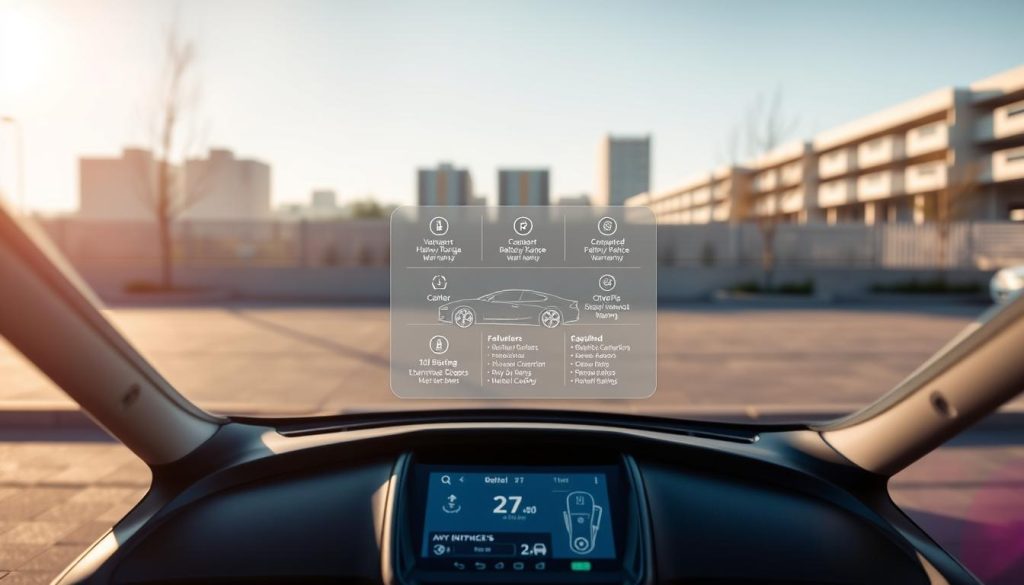
Smart shoppers prioritize three critical elements when exploring sustainable transportation choices. Battery condition remains the most vital factor, with degradation reports showing most packs retain 85-95% capacity after 100,000 miles. Chevrolet’s Bolt demonstrates this durability, maintaining 259 miles per charge in 2020 editions.
Power Source Longevity and Protections
Manufacturer coverage often extends beyond initial ownership. Many automakers honor original 8-year warranties on energy storage systems, even for subsequent buyers. Tesla’s modular designs showcase this advantage, with some units exceeding 300,000 miles without major replacements.
Real-world driving distances typically fall 10-15% below EPA estimates. Consider these range influencers:
- Climate control usage during extreme temperatures
- Terrain elevation changes during regular routes
- Software updates affecting energy management
Fast-charging compatibility proves essential for road trips. Models supporting 150kW+ systems regain 80% power in under 30 minutes. Always verify recall status and OTA update capabilities during inspections – outdated software can impact both safety and efficiency.
Spotlight on Top Affordable EV Models
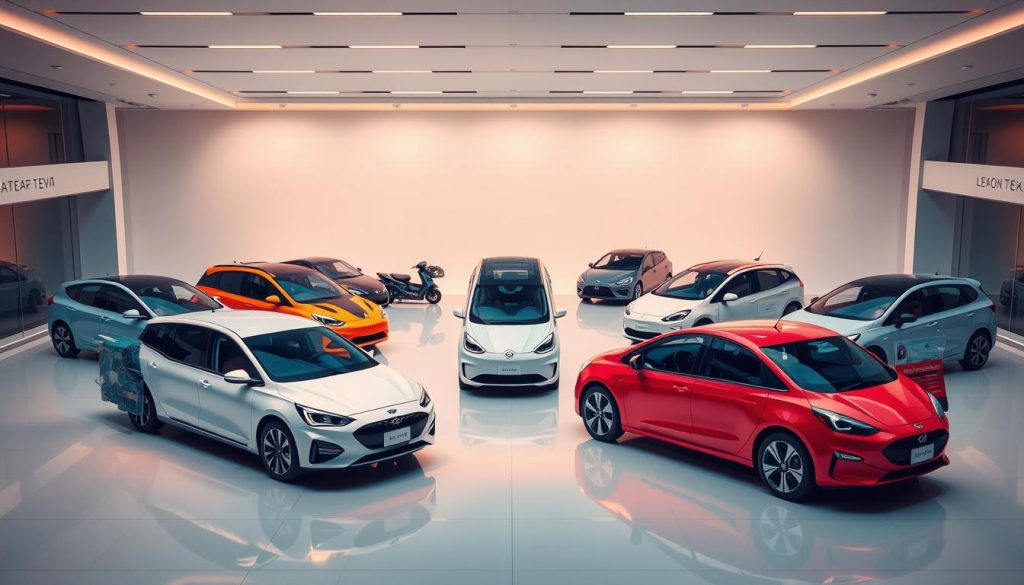
Three standout performers dominate the sustainable mobility market with premium features at accessible prices. Our analysis focuses on models delivering exceptional value through advanced tech and proven reliability.
Standout Picks: Kia EV6, Tesla Model S, and Ford Mustang Mach-E
The 2022 Kia EV6 Wind trim shines with 310-mile range and futuristic styling. Recent listings show prices as low as $26,157 – nearly 40% below new 2024 models. Kia’s 10-year powertrain warranty transfers to subsequent owners, adding peace of mind.
2018 Tesla Model S variants offer luxury sedan thrills at compact car prices. Dual-motor configurations hit 60 mph in 3.7 seconds while maintaining 335-mile endurance. Despite higher mileage examples, Tesla’s over-the-air updates keep infotainment systems current.
Ford’s Mustang Mach-E combines crossover practicality with sports car DNA. The 2021 Premium AWD model delivers 305 miles per charge in select configurations. Buyers save $15,000+ compared to showroom versions while accessing Ford’s BlueCruise driver-assist tech.
Model Comparisons and BuzzScores
Our proprietary rating system reveals why these models lead their segments:
- EV6 (9.5/10): Best warranty coverage and rapid 18-minute fast charging
- Model S (9.1/10): Unmatched acceleration and software update support
- Mach-E (9.1/10): Balanced performance and spacious interior design
Range variations prove critical in real-world use. The Mach-E’s 211-305 mile spectrum contrasts with the EV6’s consistent 310-mile performance. Tesla’s older battery tech still outperforms many newer rivals, demonstrating lasting engineering quality.
Performance, Range, and Charging Analysis
Actual driving conditions reveal surprising gaps between factory specs and real-world results. While EPA estimates provide a baseline, factors like temperature extremes and aggressive acceleration patterns reshape expectations. Smart buyers prioritize verified data from long-term owners to gauge true capabilities.
Real-World Range and Acceleration Insights
The 2020 Tesla Model Y Long Range demonstrates this gap clearly. While rated for 326 miles, owners report 290-310 miles in mixed conditions. Cold weather can slash endurance by 20%, but its 4.8-second 0-60 mph acceleration remains consistent across seasons.
Hyundai’s 2021 Kona EV outperforms expectations with a Range Score of 99—exceeding EPA efficiency ratings. Key variables affecting practical distances include:
- Climate control usage (15-30% range impact)
- Highway speeds above 70 mph
- Battery age (average 2% capacity loss/year)
Charging Capabilities and Network Availability
Tesla’s Supercharger network remains unmatched with 45,000+ global stations. A Model Y regains 162 miles in 15 minutes at V3 stations—critical for cross-country trips. Non-Tesla models like the 2021 Mustang Mach-E now access this network via adapters, though CCS compatibility limits charging speeds.
Three factors determine road trip readiness:
- Peak DC charge rate (150kW+ ideal)
- Network density along common routes
- Onboard thermal management systems
Level 2 home charging proves most cost-effective, adding 25-35 miles per hour. Public networks fill gaps for apartment dwellers, with pricing models varying by provider.
Price Comparisons and Depreciation Considerations
Smart buyers uncover hidden value by understanding how pre-owned models stack up against fresh-from-factory options. Current data shows 2-3 year-old cars sell for 40-60% less than original MSRPs, with luxury brands experiencing the sharpest drops. This creates opportunities to acquire premium tech at entry-level rates.
Fair Purchase Prices vs. New Model Costs
Recent transactions reveal striking savings across popular models. A 2022 Hyundai Ioniq 5 now averages $24,950—nearly half its $41,800 debut price. Ford’s Mustang Mach-E shows similar trends, with 2021 models selling for $27,250 compared to $47,800 when new.
Key price benchmarks for budget-conscious shoppers:
- 2022 Kia EV6: $24,700-$29,860 (37% below 2024 MSRP)
- 2020 Tesla Model Y: $28,000-$30,000 (52% price drop)
- 2023 Nissan Leaf: $19,000-$23,000 (41% savings)
Regional variations impact deals significantly. Coastal markets see 12% higher prices for Teslas, while Midwest dealers offer better negotiation room on Chevrolets. Battery condition remains crucial—models with 90%+ health command 15% premiums.
Total ownership costs tilt further in favor of pre-owned options. Insurance rates run 22% lower than new equivalents, while maintained charging habits preserve resale value. As one industry analyst notes: “Early adopters absorb the biggest hits, letting second owners enjoy premium features at compact car prices.”
Technology and Interior Features in Pre-Owned EVs
Modern pre-owned models offer tech-rich cabins that rival luxury brands. Touchscreen interfaces dominate dashboard designs, with systems receiving regular software updates to maintain functionality. Let’s explore how these features enhance daily driving experiences.
Infotainment, Design, and Comfort
Touchscreen layouts vary widely across brands. Tesla’s 15-inch horizontal display controls every function but skips Apple CarPlay support. Ford’s Mustang Mach-E uses a vertical 15.5-inch screen with wireless smartphone integration – a favorite among Android users.
Material quality separates premium models from budget options. The Hyundai Ioniq 5 features vegan leather seats and recycled plastics, while Polestar 2 cabins use traceable wool textiles. Both approaches prioritize sustainability without sacrificing comfort.
| Model | Touchscreen | Infotainment | Smartphone Integration | Interior Highlights |
|---|---|---|---|---|
| Tesla Model Y | 15″ | Proprietary OS | None | Minimalist design |
| Ford Mustang Mach-E | 15.5″ | SYNC 4A | Wireless Android Auto/CarPlay | Heated/Ventilated seats |
| Hyundai Ioniq 5 | 12.3″ | Bluelink | Wired Android Auto/CarPlay | Sliding center console |
Climate systems impact both range and comfort. Models with heat pumps – like the Kia EV6 – maintain cabin warmth using 50% less energy. Voice-controlled settings allow drivers to adjust temperatures without taking their hands off the wheel.
Sound quality varies by trim level. Base models typically include 6-speaker systems, while premium packages offer 12+ speaker setups from brands like Bang & Olufsen. Ambient lighting options create personalized atmospheres across most price points.
Practical Buying Tips and Inspection Strategies
Navigating the pre-owned EV market requires a sharp eye for detail and strategic planning. Certified models often hide surprises beneath their polished exteriors, making thorough evaluations essential. Focus on three pillars: documentation review, mechanical checks, and ownership history analysis.
Assessing Battery Health and Warranty Coverage
Always request a battery health report from dealerships or third-party inspectors. Tesla’s 8-year/150,000-mile coverage remains transferable, while Hyundai extends protection to 10 years. Confirm Chevrolet Bolt recall repairs were completed through official channels.
Look for these indicators during inspections:
• Consistent charging patterns in service records
• Less than 3% annual capacity loss
• Active thermal management systems
What to Look for in Test Drives and Listings
Scrutinize Tesla body panels for alignment gaps and uneven paint – common issues in early models. Test regenerative braking responsiveness at various speeds. Ford Mustang Mach-E listings should include recent software updates for BlueCruise functionality.
Prioritize listings with:
• Complete charging equipment sets
• Unmodified electrical systems
• Service records showing tire rotations and cabin filter changes
Cross-reference VINs with manufacturer databases to confirm warranty status. A 30-minute highway test reveals more about range accuracy than any dealership promise. Remember: patience rewards buyers with premium tech at entry-level prices.