
Car Inspection Checklist: The Hard Lesson That Turned Me Into a Smarter Driver
Look, I’ll be honest with you, I used to be that guy who’d ignore every weird sound my car made until it turned into a full-blown mechanical meltdown. The “check engine” light? More like a suggestion, right? Wrong. Dead wrong. And it cost me a transmission that basically exploded on I-95 during rush hour. Not my finest moment.
That day, sweating on the shoulder while watching my bank account flash before my eyes, I made a promise: never again. I’d become the kind of person who actually knows what’s happening under the hood. And you know what? It’s been liberating. There’s something deeply satisfying about catching a problem before it catches you.
So let’s talk about the car inspection checklist, your new best friend in the world of automotive adulting.
What Exactly Is Included in a Car Inspection Checklist?
Think of a vehicle inspection checklist as your car’s report card. It’s a systematic review of everything that keeps your ride safe, legal, and actually running. We’re talking the whole package here.
A proper auto inspection checklist covers:
- Engine diagnostics (because that’s where the magic, or disaster, happens)
- Brake system inspection (arguably the most important safety feature you’ve got)
- Tire condition and pressure (those round rubber things that literally keep you grounded)
- Fluid levels (oil, coolant, brake fluid, transmission fluid, windshield washer fluid)
- Battery health (nothing kills a Monday morning vibe like a dead battery)
- Lights and signals (turn signals exist for a reason, people)
- Suspension components (your comfort depends on this more than you think)
- Exhaust system (for emissions and not annoying your neighbors)
- Steering mechanism (pretty crucial for, you know, controlling where you go)
- Windshield wipers and glass condition (visibility matters)

The beauty of having a structured checklist? You won’t forget anything. And trust me, forgetting to check your brake pads is not the kind of surprise you want while merging onto a highway.
The DIY Revolution: Can You Really Inspect Your Own Car?
Short answer? Absolutely. You don’t need a mechanic’s certificate to perform a DIY car inspection checklist.
Here’s the thing: about 60-70% of basic vehicle maintenance is totally doable in your driveway with minimal tools. I’m not saying you’ll be rebuilding engines anytime soon, but checking fluids, inspecting tires, and running diagnostics with an OBD2 scanner? That’s amateur hour stuff. Good amateur hour stuff.
What you CAN handle:
- Checking and topping off all fluids
- Inspecting tire tread depth and pressure
- Testing battery voltage
- Examining belts and hoses for wear
- Checking light functions
- Reading diagnostic codes with a scanner
- Visual inspection of brakes (through the wheel spokes)
What you should probably leave to the pros:
- Anything requiring the car to be lifted (unless you have proper jack stands and know what you’re doing)
- Complex electrical diagnostics
- Emission system repairs
- Transmission issues
I remember the first time I successfully diagnosed a misfiring cylinder using my BlueDriver Bluetooth Pro OBD2 Scanner. Felt like a mechanical genius. The fix? A $12 spark plug. The satisfaction? Priceless.
Essential Tools: Building Your Inspection Arsenal
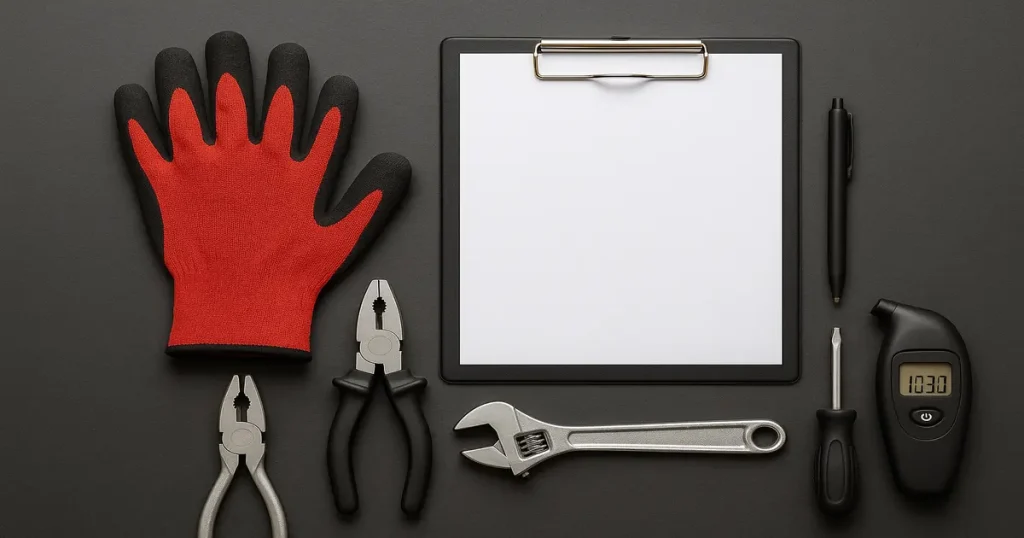
Let’s talk gear. You don’t need a garage that looks like Tony Stark’s workshop, but a few key tools will make your life infinitely easier.
The Must-Haves
| Tool | Purpose | Why It Matters |
|---|---|---|
| OBD2 Scanner | Reads engine diagnostic codes | Tells you exactly what’s wrong instead of guessing |
| Tire Pressure Gauge | Measures tire inflation | Proper pressure = safety, fuel efficiency, tire longevity |
| Flashlight/Work Light | Illuminates dark areas | You can’t inspect what you can’t see |
| Battery Tester | Checks battery health | Prevents unexpected dead battery situations |
| Basic Socket Set | General maintenance | Because everything eventually needs tightening or loosening |
| Inspection Mirror | Views hard-to-reach spots | For checking undercarriage and tight engine spaces |
For diagnostic work, I swear by the Autel MaxiCOM MK808 Scanner. Yes, it’s pricier than basic code readers, but it covers virtually every system in modern cars. Think of it as an investment in never being blindsided by your vehicle again.
For tire care, the JACO ElitePro Tire Pressure Gauge is stupidly accurate and has a backlit display. Perfect for those late-night “did I check the tire pressure?” moments before a road trip.
How Often Should You Actually Do This?
Here’s where people get confused. There are different levels of inspection frequency, and each matters.
Monthly quick checks:
- Tire pressure and visual tread inspection
- Fluid levels (especially oil and coolant)
- Light functions
- Windshield washer fluid
Quarterly deep dives:
- Full car maintenance checklist review
- Battery voltage test
- Brake pad visual inspection
- Belt and hose condition
- Wiper blade effectiveness
Annual comprehensive inspection:
- Complete annual car inspection checklist
- Your state requires a professional safety inspection
- Emissions testing (where applicable)
- Suspension components
- Exhaust system review
- Detailed undercarriage inspection
And then there’s the pre-purchase car inspection, absolutely non-negotiable when buying used. Spending $100-200 on a professional inspection can save you thousands in hidden problems. I once walked away from a “pristine” used sedan because the inspection revealed frame damage the seller conveniently forgot to mention. Best $150 I ever spent.
The Common Culprits: What Usually Goes Wrong?
After years of checking cars (mine and friends’ who suddenly remembered I “know about cars”), I’ve noticed patterns. Some issues show up more than others.
The usual suspects:
- Worn brake pads – They sacrifice themselves so you don’t, quite literally
- Low tire pressure – Sneaky slow leaks are everywhere
- Old batteries – Usually die on the coldest or hottest day of the year
- Dirty engine air filters – Choking your engine without you knowing
- Low or contaminated fluids – Neglect kills engines faster than high mileage
- Failed bulbs – You’d be amazed at how many people drive with non-functional lights
- Worn wiper blades – Fine until the first rainstorm, then suddenly critical
- Check engine lights – Often something simple, occasionally something expensive
The trick is catching these before they become expensive problems or, worse, safety hazards.
The Time Question: How Long Does This Actually Take?
A basic safety inspection checklist run-through? Maybe 20-30 minutes if you’re thorough. That’s it. Less time than you’ll spend scrolling through social media pretending to be productive.
Breaking it down:
- Quick visual walk-around: 5 minutes
- Under-hood inspection: 10 minutes
- Tire and brake check: 10 minutes
- OBD2 scan and electrical tests: 5 minutes
A professional inspection at a shop typically takes 30-60 minutes, depending on how comprehensive it is. State-required safety inspections usually run 20-45 minutes.
I do my monthly checks on Sunday mornings with coffee. It’s become this weird meditative ritual. Something is grounding about making sure the machine that transports you through life is actually functioning properly.
Professional Inspections: What’s the Damage?
Money talk, everyone’s favorite subject.
Typical costs:
- Basic safety inspection: $20-$50
- State-mandated inspection: $10-$50 (varies by state)
- Emissions testing: $15-$60
- Comprehensive pre-purchase inspection: $100-$200
- Specialized diagnostic inspection: $75-$150
Worth it? Absolutely. Think of it as insurance against buying someone else’s problem or catching your own before they multiply.
Safety vs. Emissions: Know the Difference
People constantly confuse these, so let’s clarify.
Safety Inspection Checklist:
- Focuses on vehicle components that affect safe operation
- Checks brakes, steering, suspension, lights, tires, mirrors
- Required in many states annually or biennially
- About preventing accidents
Emissions Inspection:
- Measures the pollutants your car releases
- Tests exhaust gases and checks emission control systems
- Environmental compliance
- Required in urban/high-pollution areas
- About clean air standards
Some states combine them. Others require one but not the other. A few require neither (lucky you). Know your state’s requirements; ignorance isn’t a valid excuse when you get pulled over.
The New Car Question: Do Shiny New Rides Need Inspections?
You bought new, you’re safe, right? Not exactly.
New cars typically don’t require state inspections for the first few years (usually 2-5 years, depending on location). But here’s the kicker: they still need regular maintenance checks.
Why inspect a new car?
- Manufacturing defects exist (hello, recalls)
- Break-in period maintenance is real
- Warranty compliance requires documentation
- Tire pressure doesn’t check itself
- Fluids need monitoring even when new
I learned this the hard way with a brand-new car that had a slow transmission fluid leak from the factory. Caught it at my first self-inspection at 3,000 miles. Warranty covered it completely, but only because I found it early. Had I waited until the first dealer service at 10,000 miles? Different story entirely.
Prep Like a Pro: Getting Inspection-Ready
Whether you’re doing a pre-inspection checklist for cars or prepping for an official state inspection, preparation matters.
Your 48-hour game plan:
- Clean your car (inside and out, inspectors are human and notice effort.
- Top off all fluids (check your owner’s manual for specs)
- Inflate tires to the proper PSI (found on the driver’s door jamb sticker)
- Replace any burned-out bulbs (check all lights, including the license plate)
- Fix obvious issues (that cracked windshield won’t pass, buddy)
- Clear diagnostic codes (if they’re minor and you’ve fixed the issue)
- Gather documentation (registration, previous inspection reports)
- Check wiper functionality (replace if they’re streaking)
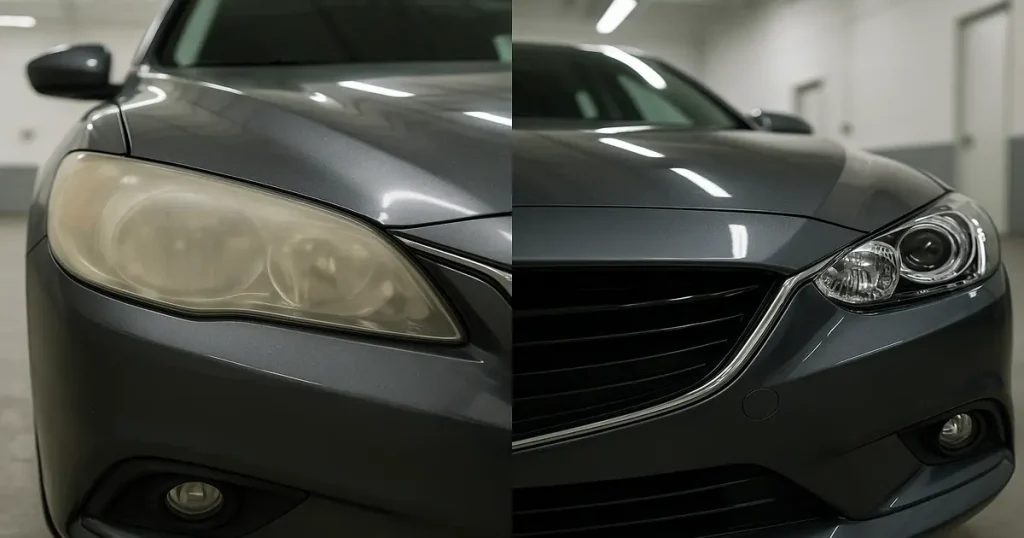
The Armor All Car Care Kit and Meguiar’s Complete Car Care Kit make quick work of cosmetic prep. And for cloudy headlights that might fail inspection? The 3M Headlight Lens Restoration Kit works miracles. I’ve used it on three different cars, and every time, people think I installed new headlights.
Smart Shopping: Tools That Actually Matter
Look, I’ve wasted money on junk tools. We all have. Here’s what actually earns its keep in my garage:
For Diagnostics: The OBDLink MX+ Bluetooth OBD2 Scanner works seamlessly with both iOS and Android. No weird compatibility issues, just plug in and read. The Ancel VD500 is a solid budget alternative if you’re just starting.
For Tires: The EPAuto 12V DC Portable Air Compressor lives in my trunk. It’s saved me countless times from slow leaks and pressure changes during temperature swings. Pair it with the Michelin Digital Tire Pressure Gauge for accuracy you can trust.
For Battery Maintenance: The Oasser Car Battery Tester gives you real data about battery health, not just a vague “seems okay.” The Tymate Car Battery Charger is perfect for maintaining batteries during storage or reviving slightly weak ones.
For General Inspection: The VIKTEC Auto Inspection Mirror helps you see everything without contorting yourself into impossible positions. The Nilight LED Work Light is rechargeable, magnetic, and bright enough to illuminate anything. And the Lisle 12-in-1 Automotive Multitool handles 90% of quick fixes you’ll encounter during inspections.
The Roadworthiness Reality Check
A car inspection checklist for roadworthiness isn’t just about passing some bureaucratic test. It’s about knowing that when you merge into traffic at 70 mph, everything will work as intended.
Every single time I inspect my car, I think about my family riding with me. My friends. Hell, the strangers in other cars who trust that I’m maintaining my vehicle. That’s heavy, but it’s real.
Critical roadworthiness components:
- Functional brakes (all four wheels)
- Adequate tire tread (minimum 2/32″, but really you want 4/32″ or more)
- Working lights and signals (visibility for you and communication with others)
- Secure steering (no play or grinding)
- Intact suspension (no excessive bouncing or wandering)
- Properly secured components (nothing dragging or loose)
These aren’t suggestions. They’re the baseline for not being a hazard on public roads.
Your Action Plan: Getting Started Today
Here’s my challenge to you: this weekend, spend 30 minutes with your car. Really look at it. Pop the hood. Check the tires. Run an OBD2 scan if you have a scanner (and if you don’t, the BlueDriver is a great first investment at around $100).
Start building a relationship with your vehicle beyond just turning the key and expecting miracles.
Your starter checklist:
- [ ] Walk around, look for damage, leaks, tire issues
- [ ] Check all exterior lights and signals
- [ ] Pop hood, check oil, coolant, brake fluid, battery
- [ ] Test windshield wipers and washer fluid
- [ ] Check tire pressure (all four tires plus spare)
- [ ] Scan for diagnostic codes
- [ ] Document everything (take photos if needed)
Download a car inspection checklist PDF if you need structure. Print it. Keep it in your glove box. Make it a habit.
The Bottom Line
A vehicle inspection checklist isn’t about becoming a certified mechanic or obsessing over every minor detail. It’s about taking ownership of the machine that gets you to work, to adventures, to the people you care about.
It’s about the confidence of knowing what’s happening before it becomes a crisis. About saving money by catching small issues before they become expensive repairs. About safety, yours and everyone else’s on the road.
I’m not that guy whose car exploded anymore. You don’t have to be either.
Start with one inspection this month. Then make it a routine. Your future self (and your wallet) will thank you.
Ready to level up your car care game? Grab an OBD2 scanner, download a checklist, and give your ride the attention it deserves. Drop a comment below with your biggest car maintenance question. Let’s keep the conversation rolling.
What’s your car inspection horror story? Or better yet, what did a regular inspection save you from? Share in the comments.