
Drive Longer, Charge Less: The Best Extended Range EVs Today
Modern drivers want eco-friendly transportation without sacrificing flexibility. Enter a new class of electric vehicles that blend battery power with backup energy sources. Unlike hybrids that rely on gas engines, these models prioritize electric propulsion while offering peace of mind for longer journeys.
The automotive industry is rapidly adopting this technology, with over a dozen models slated for U.S. release by 2026. Larger battery packs allow most daily trips to remain emission-free, while onboard generators activate seamlessly during rare charging gaps. This design eliminates “range anxiety” while cutting fuel costs by up to 60% compared to traditional SUVs.
These energy-efficient vehicles excel in two key areas. First, they reduce carbon footprints during routine commutes. Second, they maintain the versatility Americans expect, whether towing trailers or navigating rural highways. Major manufacturers are now competing to deliver models exceeding 500 miles of total travel capacity.
As battery technology improves, these solutions bridge the gap between full-electric adoption and current infrastructure limitations. Drivers gain immediate environmental benefits without waiting for charging networks to expand. The result? A practical transition toward sustainable transportation that fits diverse lifestyles.
Key Takeaways
- Combines electric driving for daily use with backup power for long trips
- Eliminates range concerns through intelligent energy management
- Major automakers launching multiple U.S. models by 2026
- Reduces emissions without compromising vehicle capability
- Operates gasoline components at peak efficiency levels
- Supports transition to cleaner transportation infrastructure
Introduction to Extended Range EVs
The evolution of green transportation now offers drivers the best of both worlds: electric efficiency and long-distance readiness. These innovative machines combine a primary battery-powered motor with a compact gasoline generator, creating a safety net for those rare moments when outlets are scarce.
How Smart Energy Solutions Work
At the heart of this technology lies an intelligent power management system. The vehicle prioritizes battery use for daily commutes, typically covering 40-60 miles on electricity alone. When charge levels dip, the backup generator activates seamlessly – like a silent co-pilot ensuring uninterrupted journeys.
Transforming Travel Confidence
For many Americans, the fear of stranded battery power outweighs environmental concerns. You can’t put a price on peace of mind during cross-country trips,
notes an automotive engineer. This hybrid approach lets drivers explore remote areas while maintaining eco-friendly operation for 90% of typical city driving.
Modern systems track charging station locations and optimize energy use automatically. The result? Vehicles that consistently deliver 300-400 miles of total range, merging sustainability with real-world practicality for diverse lifestyles.
Innovative Extended Range EV Technologies
Automotive engineers have reimagined energy solutions through three generations of range extender development. Early models used conventional gas engines, but today’s systems employ specialized components designed exclusively for electric vehicle support.
Battery and Generator Synergy
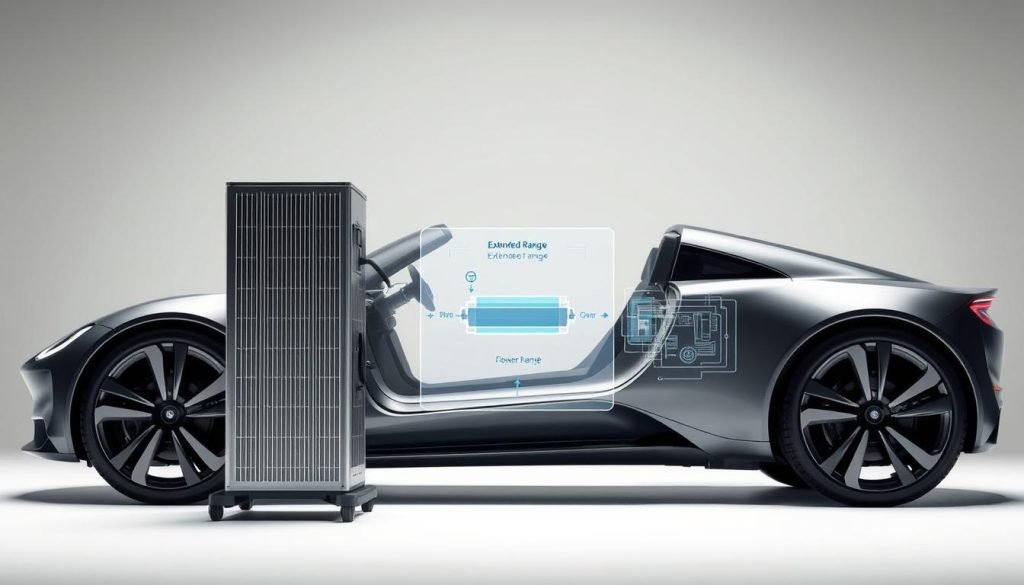
Modern battery packs (16-90 kWh) deliver enough juice for 40-100 miles of emissions-free driving. When the charge drops below 20%, compact generators activate – not to drive wheels, but to replenish the battery. This separation allows both systems to operate at peak efficiency.
Second-generation designs use rotary engines that hum quietly at steady speeds. Unlike traditional motors that constantly rev up/down, these specialized units maintain optimal RPMs. The result? Better fuel economy and reduced wear.
Advanced Hybrid and Plug-in Solutions
New plug-in hybrid models prioritize electric propulsion, unlike conventional hybrids. “The gas engine becomes a backup singer rather than the lead vocalist,” explains a Detroit-based powertrain specialist. Drivers experience seamless shifts between power sources, often unnoticed.
Third-generation prototypes explore microturbines and hydrogen fuel cells. These experimental technologies could eventually replace gasoline-based systems entirely. For now, current hybrid solutions bridge the gap between today’s infrastructure and tomorrow’s possibilities.
The Future of Plug-in Hybrid and Range Extender Systems
Car manufacturers are flipping the script on hybrid technology. Where older models used gas engines as the main power source, new designs put electricity first. This shift changes how vehicles consume energy and interact with drivers.
Evolution from Traditional PHEVs to EREVs
Early plug-in hybrids acted like upgraded gas cars with battery assists. Today’s range extender systems work backward – electric motors drive the wheels full-time, while compact generators serve as emergency backups. The Chevrolet Volt pioneered this approach, using its gas engine solely to recharge batteries during long trips.
Modern hybrids like the BMW i3 take this further. Their tiny combustion units only activate when needed, operating at fixed speeds for maximum efficiency. “We’re treating gasoline components like spare tires – there for emergencies, not daily use,” explains a Detroit-based engineer.
Future extender technology will shrink combustion systems even more. AI predicts when drivers might need extra power, activating generators only for specific route segments. This smart management cuts fuel use by up to 40% compared to conventional vehicles.
The auto industry’s timeline suggests most new plug-in hybrids will adopt this electric-first philosophy by 2028. As batteries improve, backup generators become smaller and less frequent in use – a bridge to fully electric transportation that works today.
Extended Range EV Models Redefining Efficiency
Automakers are pushing boundaries with vehicles that deliver both power and practicality. Three upcoming releases showcase how intelligent engineering balances daily electric use with occasional fuel needs. These solutions maintain zero-emission commuting while offering unmatched flexibility for adventure seekers.
Key Performance Metrics and Driving Range
The Ram 1500 Ramcharger leads the pack with a 92 kWh battery, enabling 145 emission-free miles. It’s 3.6L V6 generator helps achieve 690 total miles, enough for cross-country trips. Rival BMW’s X5 REx reportedly targets 621 miles, while Hyundai’s Santa Fe EREV uses dual motors for smooth long-distance cruising.
| Model | Electric Range | Total Range | Battery |
|---|---|---|---|
| Ram 1500 Ramcharger | 145 miles | 690 miles | 92 kWh |
| BMW X5 REx | 55 miles | 621 miles | 24 kWh |
| Hyundai Santa Fe EREV | 90 miles | 550+ miles | 27.1 kWh |
Comparing Gasoline Generators and Electric Systems
Modern gasoline components act as precision tools rather than primary power sources. We design generators to operate at peak efficiency – like a surgical strike when needed,
explains a powertrain engineer. This approach lets vehicles maintain 40+ MPG in hybrid mode while preserving battery life.
Advanced thermal management systems keep engines at ideal temperatures during generator use. Combined with regenerative braking, these features help drivers save $800-$1,200 annually on fuel compared to traditional SUVs.
Comparative Analysis of Extended Range Electric Vehicles
Today’s electric vehicle market offers diverse solutions for drivers prioritizing flexibility. Manufacturers employ distinct engineering philosophies, creating noticeable variations in performance and pricing. Let’s examine how current models stack up in critical categories.
Model Specifications and Powertrain Differences
The Ram 1500 Ramcharger showcases heavy-duty capability with its 92 kWh battery and 145-mile electric range. Its V6 generator prioritizes raw power for towing needs. In contrast, the Hyundai Santa Fe EREV uses dual motors for smooth acceleration, favoring urban agility over brute strength.
Powertrain designs reveal strategic choices. Some models use compact 1.5L engines as range extenders, while others integrate larger fuel tanks for fewer stops. The Genesis GV70 EREV balances both approaches, pairing a 27.1 kWh battery with a 13-gallon tank for 550+ total miles.
Pricing, Features, and Value Comparison
Entry points vary dramatically across brands. The Santa Fe EREV starts near $55,000, targeting budget-conscious families. At the premium end, the Grand Wagoneer 4xe exceeds $100,000, offering luxury amenities like massaging seats and night vision cameras.
Our pricing reflects dual commitments to innovation and accessibility,
states a Jeep engineer. Mid-range options like the $65,000 Ramcharger Tradesman appeal to contractors needing worksite capability with emission-free commuting.
Value seekers should compare power delivery systems and charging speeds alongside sticker prices. Models with faster DC charging and smart energy management often justify higher costs through long-term savings.
Overcoming Range Anxiety with Extended Range Solutions
Drivers considering electric cars face a critical roadblock: limited charging options. With only 175,000 public ports available nationwide, many Americans hesitate to switch from gas-powered vehicles. Extended range technology bridges this gap, letting drivers use clean energy daily while keeping backup power for emergencies.
Real-world Benefits and Practical Use Cases
Range anxiety affects nearly 60% of potential buyers, according to AAA surveys. Modern solutions tackle this fear head-on. A Phoenix resident shares: I drive 50 electric miles to work, but knowing I can refuel anywhere removes stress during weekend road trips.
| Charging Infrastructure | Current Status | 2030 Goal |
|---|---|---|
| Public Chargers | 175,000 ports | 1.2 million |
| Home Chargers | 1.5 million | 8.3 million |
Urban dwellers benefit most. Apartment residents often lack home charging, making public stations essential. Extended range models let these drivers use electricity for 90% of trips while keeping fuel backups for rare needs.
The technology also supports rural lifestyles. Farmers can tow equipment using clean energy during local tasks, then activate generators for cross-state auctions. This flexibility helps people adopt sustainable transportation without changing their routines.
As charging networks expand, these vehicles serve as smart transition tools. Drivers gain immediate emission reductions while infrastructure catches up, a win-win for practicality and planet health.
Performance, Efficiency, and Design Insights
Automotive innovation now delivers power and comfort without compromise. New models balance raw capability with intelligent energy use, proving eco-friendly performance doesn’t mean sacrificing luxury. Let’s explore how cutting-edge engineering meets driver expectations.
Balancing Power with Practical Features
The 2026 Ramcharger showcases this equilibrium, offering 654 horsepower while maintaining a 4.5-second 0-60 time. It’s a slight power reduction from earlier prototypes, highlighting a focus on real-world driver needs over spec sheet bragging rights.
Advanced engine designs prioritize fuel efficiency through steady RPM operation. Scout Motors’ upcoming EREVs use LFP pack technology – cheaper and more durable than traditional batteries. These 27.1 kWh units withstand frequent charging cycles while reducing production costs.
Interior innovations redefine comfort standards. The Li One model features heated massage seats and dashboard-spanning screens. Such amenities transform the car cabin into a mobile lounge, blending sustainability with indulgence.
Modern dashboards now display energy flows and charging status through intuitive interfaces. These systems help drivers optimize battery use while maintaining climate controls and entertainment options. The result? Vehicles that feel as smart as they perform.