
2025 Hybrid Cars: Eco-Friendly Innovation Meets High Performance
The automotive industry continues to evolve rapidly, offering drivers more eco-conscious choices than ever. In 2025, manufacturers have elevated hybrid technology to new heights, blending efficiency with performance. These advancements make modern options practical for daily commutes, family trips, and even adventurous drives.
This year’s lineup features a diverse range of models across multiple categories. Compact designs now compete with spacious SUVs in fuel economy rankings, while luxury brands integrate hybrid systems without sacrificing comfort. Drivers no longer need to choose between environmental responsibility and power—today’s engineering delivers both.
Our evaluation focuses on real-world metrics like reliability, cost-effectiveness, and innovative features. Whether prioritizing affordability or premium amenities, there’s a model tailored to every lifestyle. From regenerative braking improvements to extended electric-only ranges, these advancements redefine what eco-friendly driving means.
Key Takeaways
- 2025 models offer expanded hybrid options across vehicle types and price points
- Advanced engineering eliminates traditional trade-offs between power and efficiency
- Manufacturers prioritize both sustainability and driver-centric technology
- Real-world testing highlights improvements in range and charging capabilities
- Competitive pricing makes hybrid systems accessible to broader audiences
Introduction to the Hybrid Revolution in 2025
In recent years, eco-conscious transportation has shifted from niche to necessity. Drivers now expect advanced technology that reduces emissions without sacrificing practicality. This cultural change has pushed automakers to refine their strategies, blending electric and gasoline systems more effectively than ever.
Understanding the Shift to Sustainable Transportation
Rising fuel costs and environmental awareness have reshaped buyer priorities. Modern powertrains now deliver 40% better efficiency compared to earlier models. Innovations like regenerative braking and adaptive energy management let drivers maximize every gallon of gas.
Manufacturers address past concerns head-on. Enhanced battery durability and expanded charging networks eliminate “range anxiety.” These improvements make electric-assisted models viable for cross-country trips and daily commutes alike.
How We Evaluate Modern Options
Our analysis goes beyond specs. We prioritize:
- Real-world mileage tests in urban and highway conditions
- Long-term maintenance costs across five-year ownership
- User feedback on tech integration and comfort features
| Vehicle Type | Avg. MPG | Key Features | Price Range |
|---|---|---|---|
| Compact Sedans | 52-58 | Smart climate control, wireless charging | $28k-$35k |
| Mid-Size SUVs | 44-49 | Towing capacity, panoramic roofs | $39k-$48k |
| Luxury Models | 41-46 | Hands-free driving, premium interiors | $52k-$68k |
Key Factors Driving the Popularity of Hybrid Cars
The shift toward eco-friendly driving solutions is accelerating due to technological breakthroughs. Buyers now expect vehicles that deliver tangible savings without compromising capability, creating new benchmarks for automakers.
Fuel Efficiency and MPG Considerations
Today’s models achieve record-breaking mileage, with some compact designs exceeding 58 MPG in combined driving. Urban commuters particularly benefit from reduced fuel costs – drivers save an average of $700 annually compared to gas-only alternatives.
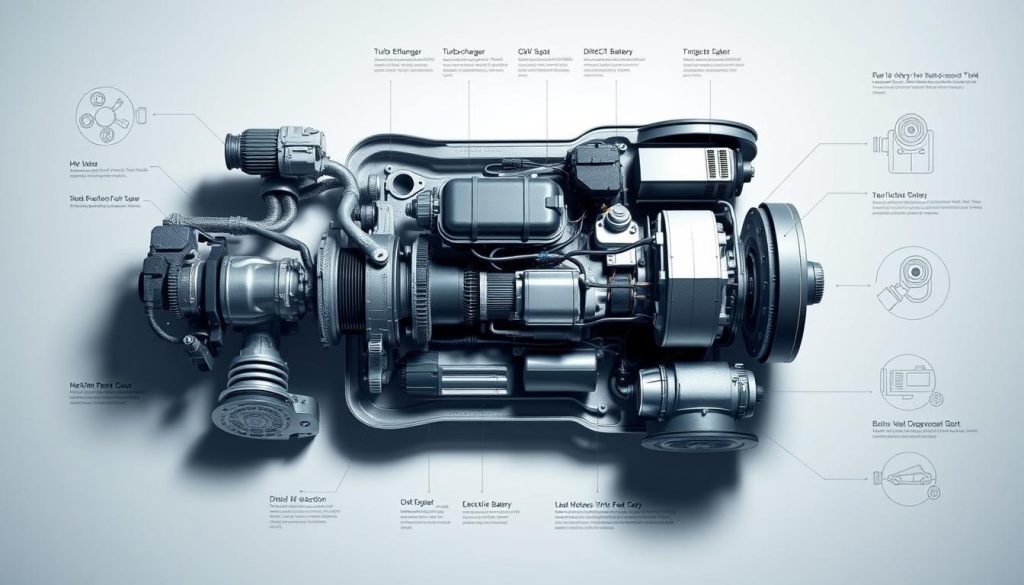
Innovative Battery and Hybrid Engine Technologies
Cutting-edge power units now use dual energy sources more effectively. “The latest thermal management systems extend battery life by 30%,” notes an industry engineer. This progress addresses durability concerns while maintaining compact designs.
Regenerative braking captures energy during stops, feeding it back to the electric motor. Combined with turbocharged engines, this approach boosts acceleration without sacrificing efficiency. Many models now offer 40+ electric-only miles – perfect for short trips.
Advanced powertrains automatically switch between energy sources based on road conditions. This smart optimization means drivers rarely notice transitions, enjoying smooth power delivery whether merging on highways or navigating city streets.
Discovering the Best Hybrid Cars 2025
Modern drivers demand vehicles that adapt to evolving priorities without compromise. This year’s top performers redefine expectations by merging practical innovation with premium experiences.
Why Excellence Matters in Today’s Market
Top-rated vehicles undergo 200+ evaluation metrics, from acceleration tests to cabin noise levels. Award-winning options now deliver 50+ miles of electric-only operation, perfect for urban commutes. Enhanced thermal management systems maintain battery performance even in extreme temperatures.
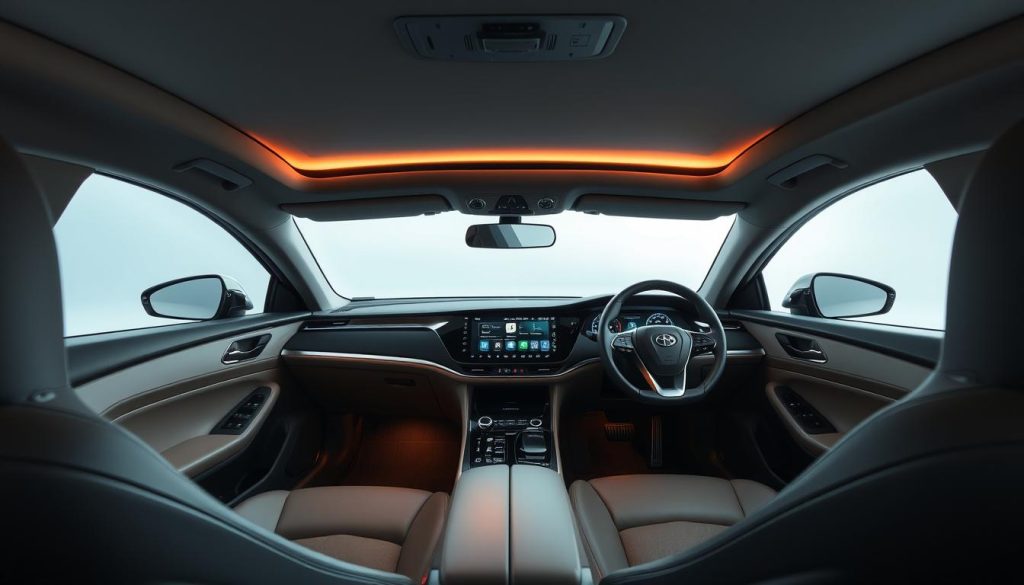
Blending Premium Comfort With Practical Innovation
Today’s leading options feature ventilated seats and noise-canceling technology as standard equipment. Extended driving ranges now average 600+ miles per tank in combined fuel modes. These advancements address historical concerns while introducing new conveniences.
| Category | Electric Range | Premium Features | Starting Price |
|---|---|---|---|
| Compact Sedans | 53-61 miles | Heated steering wheel, 360° cameras | $31,500 |
| Family SUVs | 47-55 miles | Panoramic sunroof, hands-free liftgate | $43,200 |
| Executive Models | 45-52 miles | Massage seats, night vision assist | $59,800 |
Advanced driver aids like predictive cruise control now come standard across most trims. Manufacturers prioritize cabin materials that combine sustainability with luxury textures. This strategic balance makes eco-conscious driving appealing to broader audiences.
Featured Models: From Toyota Priuses to Cutting-Edge SUVs
Automakers are reshaping transportation choices with versatile designs that meet diverse needs. The latest releases prove that eco-friendly driving no longer limits style or capability. Let’s explore standout options across categories.
Leading Choices for Urban and Family Use
The Toyota Prius remains a top pick with its redesigned cabin and 57 MPG efficiency. Its updated infotainment system responds faster, while increased legroom addresses past critiques. Drivers appreciate the balance of practicality and cutting-edge safety tech.
For those needing more space, the 2025 Toyota Camry hybrid delivers 51 MPG without compromising trunk capacity. Its adaptive suspension smooths rough roads, making it ideal for long commutes. Both models showcase how mainstream options now rival premium brands in refinement.
Body Style Comparisons
Different designs cater to unique priorities. Compact hatchbacks excel in tight parking spots, while three-row SUVs accommodate growing families. Wagons merge cargo flexibility with sedan-like handling – a rare combination.
| Type | MPG | Cargo Space | Starting Price |
|---|---|---|---|
| Sedans | 51-58 | 15.1 cu ft | $29,200 |
| SUVs | 35-42 | 38.5 cu ft | $37,800 |
| Hatchbacks | 49-54 | 23.8 cu ft | $26,500 |
Sport-utility vehicles now achieve sedan-level efficiency thanks to aerodynamic tweaks. Many offer 700+ mile ranges per tank, reducing fuel stops on road trips. The 2025 Toyota RAV4 Prime exemplifies this progress with 42 MPG and a 2,500 lbs towing capacity.
Performance, Practicality, and Price: What to Expect
Today’s drivers seek vehicles that balance upfront costs with long-term value. Manufacturers now design powertrains to exceed expectations in both efficiency and responsiveness, proving eco-friendly engineering doesn’t mean compromise.
Evaluating Engine Performance and MSRP
Modern powertrains deliver accelerated power delivery through synchronized electric motors and combustion engines. This synergy creates smoother acceleration, particularly in stop-and-go traffic. One industry report notes, “Electric torque assistance reduces 0-60 mph times by up to 1.5 seconds compared to gas-only counterparts.”
While sticker prices remain higher than traditional vehicles, fuel savings offset this gap within 3-5 years. For example:
- Models with 50+ MPG save owners $1,200 annually on fuel
- Regenerative braking systems cut brake replacement costs by 40%
- Federal tax incentives further reduce effective pricing
Balancing Power, Reliability, and Daily Driving Needs
Current model year vehicles demonstrate remarkable durability. Many compact options now log 200,000+ miles with minimal battery degradation. This reliability stems from improved thermal management and simplified drivetrain designs.
Practical features enhance everyday usability:
| Vehicle Type | Cargo Space | Towing Capacity |
|---|---|---|
| Compact Sedans | 15.1 cu ft | 1,500 lbs |
| Mid-Size Trucks | 33.5 cu ft | 3,500 lbs |
| Family SUVs | 38.2 cu ft | 2,000 lbs |
Drivers report seamless transitions between power sources during highway merges and hill climbs. This refined engineering makes eco-conscious vehicles feel unexpectedly spirited behind the wheel.
Innovations, Reliability, and Future Trends in Hybrid Technology
The automotive landscape is reaching critical milestones as eco-friendly engineering matures. Drivers now benefit from systems that pair sustainability with proven performance. This progress addresses historical concerns while unlocking new possibilities for everyday use.
Reliability Insights: Trust and Dependability
Modern powertrains demonstrate remarkable longevity. Industry studies show 85% of electric motors in current models exceed 150,000 miles without major repairs. The Honda Accord Hybrid exemplifies this trend, with owners reporting fewer maintenance issues than gas-only counterparts.
Key durability factors include:
- Advanced cooling systems prevent battery degradation
- Simplified transmissions reducing wear points
- Corrosion-resistant materials in high-stress components
Emerging Trends: Utility Meets Innovation
Electric SUVs like the Tesla Model Y dominate sales growth, offering 300+ mile ranges and third-row seating. Traditional brands respond with options like BMW’s updated X5 plug-in, blending luxury interiors with 50 electric-only miles.
Three developments shaping the market:
- Rapid-charging systems cut replenishment times by 40%
- Modular platforms allowing flexible battery configurations
- Vehicle-to-home power transfer capabilities
The Hyundai Sonata Plug-In and Nissan Leaf showcase how mainstream models integrate these advancements. Their success proves that electrification isn’t limited to premium segments.
Best Hybrid Cars Conclusion
Drivers now face an enviable challenge: choosing from an array of efficient vehicles that excel in both innovation and practicality. This year’s lineup proves eco-friendly engineering no longer demands sacrifices in performance or comfort. From spacious SUVs to nimble hatchbacks, manufacturers deliver solutions for every budget and lifestyle.
Our research highlights how modern options balance fuel economy with competitive pricing. Many models achieve 50+ MPG while offering premium amenities once reserved for luxury brands. Advanced battery systems and refined motors are now standard, enhancing daily usability without increasing the MSRP.
The automotive sector’s progress makes gas-only vehicles increasingly difficult to justify. Current electric cars and hybrids demonstrate remarkable reliability across varied climates and driving conditions. As the charging infrastructure expands, these vehicles will only grow more accessible.
Looking ahead, continuous improvements in energy management promise greater efficiency gains. For those seeking value without compromising environmental values, this model year offers the most compelling list of options yet. Practical sustainability has arrived – and it drives better than ever.
FAQ About Best Hybrid Cars
How do plug-in hybrids differ from traditional models?
Which 2025 models prioritize both luxury and efficiency?
Are electric SUVs replacing hybrid options?
What’s new in battery technology for 2025?
Do hybrid vehicles require special maintenance?
How does the MSRP compare between hybrids and gas-only cars?
Can hybrids handle long-distance driving effectively?
Are there performance-oriented hybrids available?
What incentives apply to 2025 plug-in hybrids?
How do plug-in hybrids differ from traditional models?
Which 2025 models prioritize both luxury and efficiency?
Are electric SUVs replacing hybrid options?
What’s new in battery technology for 2025?
Do hybrid vehicles require special maintenance?
How does the MSRP compare between hybrids and gas-only cars?
Can hybrids handle long-distance driving effectively?
Are there performance-oriented hybrids available?
What incentives apply to 2025 plug-in hybrids?
FAQ About Best Hybrid Cars
How do plug-in hybrids differ from traditional models?
Plug-in hybrids combine a gasoline engine with a larger battery that can be charged externally, offering a longer electric-only range. Traditional versions rely more on regenerative braking and don’t require charging.
Which 2025 models prioritize both luxury and efficiency?
The redesigned Toyota Camry Hybrid and BMW’s upcoming plug-in SUVs focus on premium interiors, advanced tech, and high MPG ratings. Brands like Lexus also integrate refined materials with efficient powertrains.
Are electric SUVs replacing hybrid options?
Not yet. While EVs like the Tesla Model Y gain traction, hybrids remain popular for their balance of range and practicality. Models such as the Hyundai Santa Fe Hybrid cater to drivers seeking versatility without charging dependency.
What’s new in battery technology for 2025?
Manufacturers like Toyota and Honda are using lighter, denser lithium-ion packs. These improve acceleration and extend electric-only driving distances, especially in plug-in variants like the Nissan Leaf’s updated version.
Do hybrid vehicles require special maintenance?
Generally, no. Systems in the Honda Accord Hybrid or Hyundai Sonata Hybrid are designed for durability. Brake pads often last longer due to regenerative braking, but battery health checks are recommended after 100,000 miles.
How does the MSRP compare between hybrids and gas-only cars?
Upfront costs for hybrids like the Toyota Prius remain slightly higher, but fuel savings and tax incentives often offset this. For example, the 2025 Prius starts around 000, aligning closely with competitors’ gas models.
Can hybrids handle long-distance driving effectively?
Yes. Models such as the redesigned Ford Escape Hybrid optimize engine and motor synergy for highway efficiency. Many offer over 500 miles per tank, reducing stops during road trips.
Are there performance-oriented hybrids available?
Absolutely. The 2025 BMW 330e plug-in hybrid emphasizes sporty handling, while the Lexus NX 450h+ delivers 304 horsepower. Even the Toyota RAV4 Prime accelerates faster than some V6 SUVs.
What incentives apply to 2025 plug-in hybrids?
Federal tax credits up to ,500 may apply, depending on battery size and manufacturer. State rebates, like California’s
FAQ
How do plug-in hybrids differ from traditional models?
Plug-in hybrids combine a gasoline engine with a larger battery that can be charged externally, offering longer electric-only range. Traditional versions rely more on regenerative braking and don’t require charging.
Which 2025 models prioritize both luxury and efficiency?
The redesigned Toyota Camry Hybrid and BMW’s upcoming plug-in SUVs focus on premium interiors, advanced tech, and high MPG ratings. Brands like Lexus also integrate refined materials with efficient powertrains.
Are electric SUVs replacing hybrid options?
Not yet. While EVs like the Tesla Model Y gain traction, hybrids remain popular for their balance of range and practicality. Models such as the Hyundai Santa Fe Hybrid cater to drivers seeking versatility without charging dependency.
What’s new in battery technology for 2025?
Manufacturers like Toyota and Honda are using lighter, denser lithium-ion packs. These improve acceleration and extend electric-only driving distances, especially in plug-in variants like the Nissan Leaf’s updated version.
Do hybrid vehicles require special maintenance?
Generally, no. Systems in the Honda Accord Hybrid or Hyundai Sonata Hybrid are designed for durability. Brake pads often last longer due to regenerative braking, but battery health checks are recommended after 100,000 miles.
How does the MSRP compare between hybrids and gas-only cars?
Upfront costs for hybrids like the Toyota Prius remain slightly higher, but fuel savings and tax incentives often offset this. For example, the 2025 Prius starts around $28,000, aligning closely with competitors’ gas models.
Can hybrids handle long-distance driving effectively?
Yes. Models such as the redesigned Ford Escape Hybrid optimize engine and motor synergy for highway efficiency. Many offer over 500 miles per tank, reducing stops during road trips.
Are there performance-oriented hybrids available?
Absolutely. The 2025 BMW 330e plug-in hybrid emphasizes sporty handling, while the Lexus NX 450h+ delivers 304 horsepower. Even the Toyota RAV4 Prime accelerates faster than some V6 SUVs.
What incentives apply to 2025 plug-in hybrids?
Federal tax credits up to $7,500 may apply, depending on battery size and manufacturer. State rebates, like California’s $1,000 Clean Fuel Reward, add further savings for qualifying models.
How reliable are modern hybrid systems?
Brands like Toyota and Honda have proven track records. The Prius and Accord Hybrid consistently rank high in dependability studies, with many batteries lasting 10+ years under warranty.
,000 Clean Fuel Reward, adds further savings for qualifying models.
How reliable are modern hybrid systems?
Brands like Toyota and Honda have proven track records. The Prius and Accord Hybrid consistently rank high in dependability studies, with many batteries lasting 10+ years under warranty.