
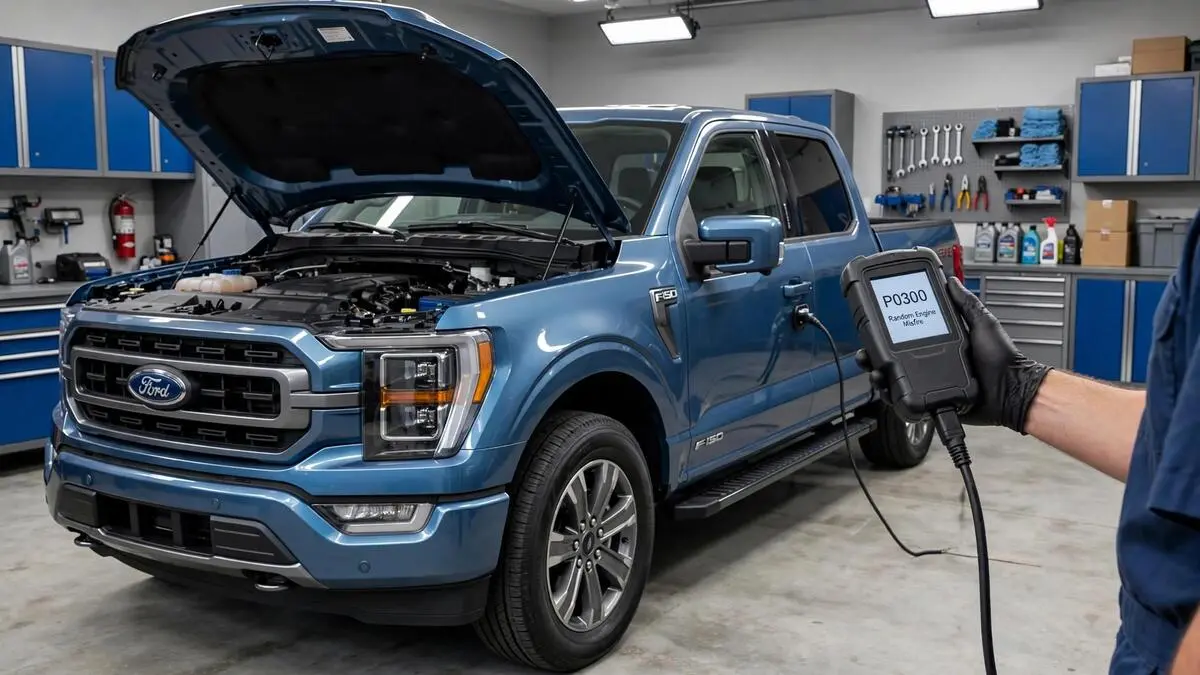
P0300 Code Ford F-150: Causes, Diagnosis & DIY Fixes (Complete 2026 Guide)
Table of contents Tools & Parts Needed Root Causes &…
Quick Summary: A P0300 code on your Ford F-150 means the engine computer detected random/multiple cylinder misfires, most often caused by worn spark plugs, degraded ignition coils, or a vacuum leak. Diagnosis takes about 30–60 minutes, and DIY repairs typically run 1–3 hours and cost $40–$250 in parts, versus $300–$700+ at a shop.
Tools & Parts Needed
| Item Required | Recommended Tool / Part | Primary Use |
|---|---|---|
| OBD-II Scanner | Bluetooth code reader (e.g., BlueDriver) or basic handheld scanner | Pull the P0300 code plus freeze-frame data and check for misfire-specific codes (P0301–P0308) |
| Spark Plugs | OEM-spec iridium plugs (Motorcraft SP-546 or equivalent for your engine) | Replace worn or fouled plugs, the #1 cause of P0300 |
| Ignition Coils | Motorcraft DG-521 or equivalent per cylinder bank | Replace weak/failing coils causing intermittent misfires |
| Spark Plug Socket | 5/8-inch magnetic spark plug socket, 3/8-inch drive | Safely remove and install plugs without dropping them into the well |
| Torque Wrench | Inch-pound/ft-lb torque wrench | Torque spark plugs to spec (typically 13–15 lb-ft) to avoid thread damage |
| Dielectric Grease | Small tube of dielectric grease | Coat coil boots and connectors to prevent moisture and arcing |
| Fuel System Cleaner | Chevron Techron or similar | Address minor injector clogging contributing to lean misfires |
| Vacuum Leak Detector | Propane torch tip or smoke machine (or simple carb cleaner spray) | Pinpoint intake vacuum leaks that cause lean-condition misfires |
| Basic Hand Tools | Ratchet set, extensions, trim panel tool | General access to plugs, coils, and intake components |
| Shop Rags & Compressed Air | Standard shop rags, can of compressed air | Clean debris from spark plug wells before removal |
Root Causes & Diagnostics
- Worn or Fouled Spark Plugs: Over time, plug electrodes erode and gaps widen, causing weak or inconsistent spark. This is the most common P0300 culprit on higher-mileage F-150s, especially past 60,000–100,000 miles.
- Failing Ignition Coils: Ford F-150s (especially 3.5L EcoBoost and 5.0L Coyote engines) use coil-on-plug ignition. A cracked coil boot or internally shorted coil causes intermittent misfires that often worsen when the engine is hot or during rain.
- Vacuum Leaks: Cracked intake boots, a bad PCV valve, or a loose intake manifold gasket let unmetered air into the engine, creating a lean condition that triggers random misfires across multiple cylinders.
- Fuel Delivery Issues: A weak fuel pump, clogged fuel filter, or dirty/failing fuel injectors can starve cylinders of fuel, especially under load or at highway speed.
- Carbon Buildup on Intake Valves: Common on direct-injection EcoBoost engines, carbon deposits disrupt airflow and combustion consistency, leading to sporadic misfires.
- Low Fuel Pressure or Bad Fuel Quality: Contaminated or low-octane fuel (below Ford’s recommended rating) can cause pre-ignition or incomplete combustion, especially in turbocharged EcoBoost models.
- Damaged Wiring or Connectors: Corroded or loose coil pack connectors, often from engine bay moisture, cause intermittent electrical dropout that mimics a mechanical misfire.
- Low Compression (Mechanical Issue): A worn piston ring, valve, or head gasket problem can cause a true mechanical misfire. This is less common but worth ruling out if electrical/fuel fixes don’t resolve the code.
Step-by-Step DIY Repair Guide
Safety First: Always let the engine cool completely before working near the exhaust manifold or coils. Disconnect the negative battery terminal before touching any electrical components, and work in a well-ventilated area if you’ll be using cleaners or fuel system products.
Step 1: Disconnect the Negative Battery Terminal Use a 10mm wrench to loosen and remove the negative (black) battery cable. This prevents electrical shorts and resets some minor sensor faults while you work.
Step 2: Scan for Codes and Record Freeze-Frame Data Plug in your OBD-II scanner and note whether you have a pure P0300 (random misfire) or additional codes like P0301–P0308 pointing to a specific cylinder. This tells you whether the problem is isolated or affecting multiple cylinders.
Step 3: Inspect Ignition Coils and Wiring Visually Remove the engine cover and check each coil pack and its wiring harness for cracked boots, corrosion, or loose connectors. Apply a light coat of dielectric grease to connectors as you go.
Step 4: Remove and Inspect Spark Plugs Using your spark plug socket and extension, remove each plug one at a time. Check for excessive electrode wear, oil fouling, or carbon deposits — any of these indicate it’s time for replacement.
Step 5: Install New Spark Plugs to Torque Spec Gap new plugs if required (pre-gapped iridium plugs usually don’t need this) and thread them in by hand to avoid cross-threading. Torque to 13–15 lb-ft using your torque wrench — overtightening can crack the porcelain insulator.
Step 6: Test or Swap Ignition Coils If you suspect a coil issue, swap coils between cylinders (e.g., cylinder 1 and cylinder 4) and clear the code. If the misfire code follows the coil to its new cylinder, that coil is bad and needs replacement.
Step 7: Check for Vacuum Leaks With the engine running, spray a small amount of carb cleaner around intake gaskets, the PCV valve, and vacuum lines. A change in idle RPM indicates a leak at that location — replace the affected hose, gasket, or PCV valve.
Step 8: Inspect Fuel Delivery Check fuel pressure with a gauge if available (Ford spec varies by engine, typically 55–65 psi for port-injected models). Replace a clogged fuel filter or add a quality fuel system cleaner to address minor injector fouling.
Step 9: Reconnect the Battery and Clear Codes Reattach the negative terminal, then use your scanner to clear the stored P0300 code. This resets the check engine light and prepares the system for a fresh test.
Step 10: Road Test and Confirm the Fix Drive the truck through a mix of city and highway speeds for at least 20–30 miles, monitoring for the check engine light or rough idle. Re-scan afterward to confirm no new misfire codes have set.
Cost Breakdown: DIY vs. Mechanic Shop
| Repair Component | DIY Cost (Parts Only) | Mechanic Shop Cost (Parts + Labor) |
|---|---|---|
| Spark Plugs (set of 6-8) | $40–$90 | $180–$350 |
| Ignition Coils (1-2 units) | $60–$150 | $200–$400 |
| Vacuum Leak Repair (hose/gasket) | $15–$50 | $120–$250 |
| Diagnostic Scan | $0 (own scanner) or $20 (auto parts store, often free) | $80–$150 |
| Estimated Total | $40–$250 | $300–$700+ |
Total Estimated Savings: $260–$550+ by doing the repair yourself, depending on which components need replacement and your local labor rates.
Frequently Asked Questions (FAQs)
Can I still drive my F-150 with a P0300 code? Short trips at moderate speed are generally okay, but prolonged driving with an active misfire can damage your catalytic converter. It’s best to diagnose and fix the issue within a few days of the check engine light appearing.
Will a P0300 code clear itself? It can temporarily go away if the misfire was intermittent, but the underlying cause will likely trigger it again. Always address the root cause rather than just clearing the code.
How much does it cost to fix a P0300 code on a Ford F-150? DIY repairs typically cost $40–$250 in parts, while professional shop repairs range from $300–$700 or more depending on labor rates and which components are at fault.
Is P0300 the same as a specific cylinder misfire code like P0301? No — P0300 indicates random or multiple cylinder misfires, while codes like P0301 point to a single, specific cylinder. Seeing both together usually means one bad component (like a coil) is affecting overall engine performance.